ServicesExams & Cleanings
Exams & Cleanings for Kids in Plympton
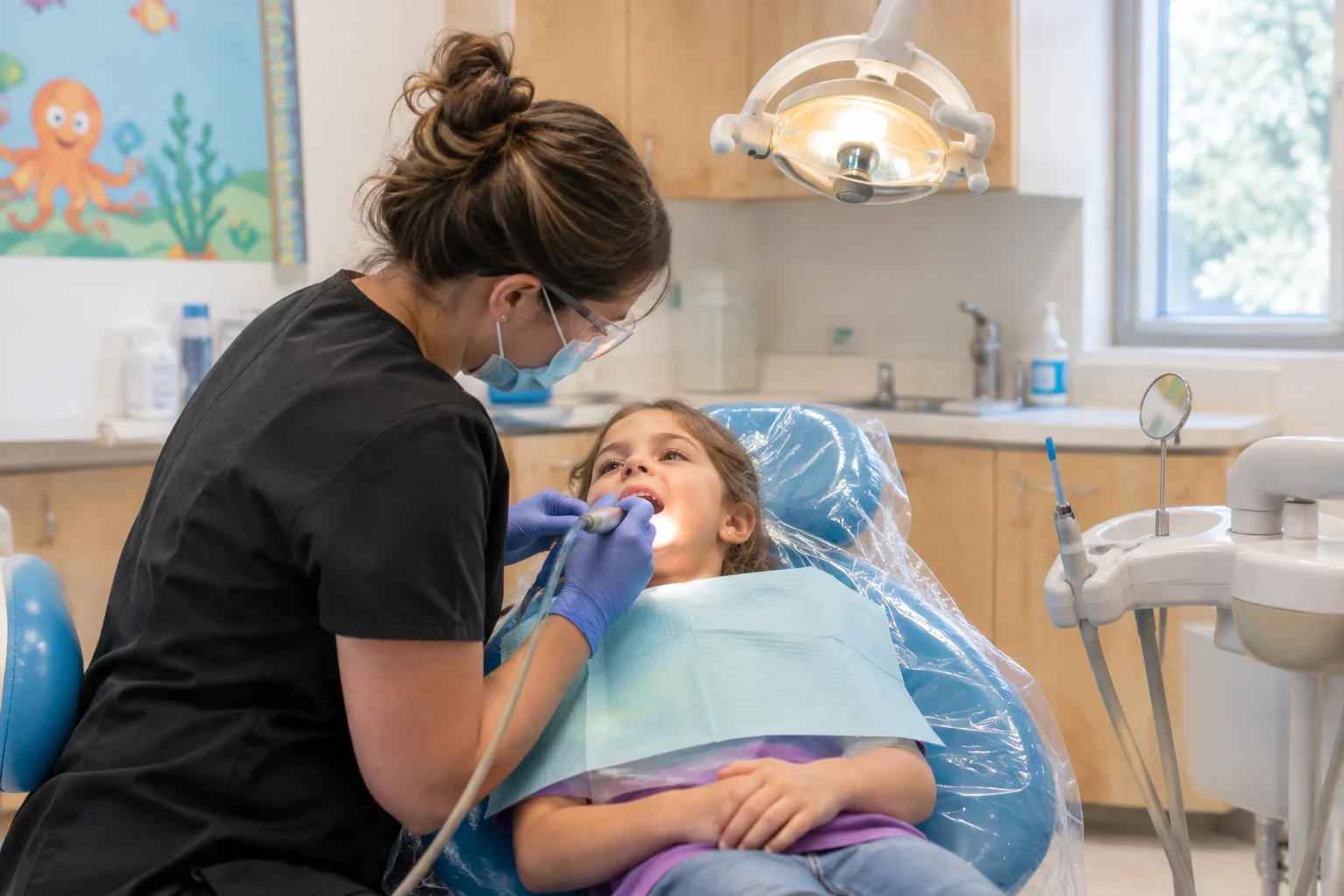
A checkup is where most dental problems get caught small. We clean away the plaque and tartar brushing misses, check every tooth surface for early decay, and watch how new teeth are coming in. Your child sees the same people each time, so the chair starts to feel familiar.
What a Checkup Actually Does
Tooth decay starts with plaque, a sticky film of bacteria that feeds on sugar and makes acid. That acid pulls minerals out of enamel. The first sign is a chalky white spot, and at that stage the enamel can often still harden again with good brushing and fluoride. Left alone, the spot softens into a cavity that needs a filling.
Children's enamel is thinner than adult enamel, especially on baby teeth, so this process moves faster in kids. A cleaning every six months removes the buildup before it does damage, and the exam finds the white spots while they can still be reversed.
We keep the same small group of people with your child from the first visit on. The hygienist who cleaned their teeth last spring is the one who notices that a molar looks different this fall, because she remembers what it looked like before.
What Happens During the Visit
- Plaque and tartar removal
- Plaque that sits too long hardens into tartar, also called calculus, which a toothbrush cannot remove. We lift it off with small hand scalers, paying extra attention behind the lower front teeth and along the gumline of the back molars, where it collects most.
- Polish and floss
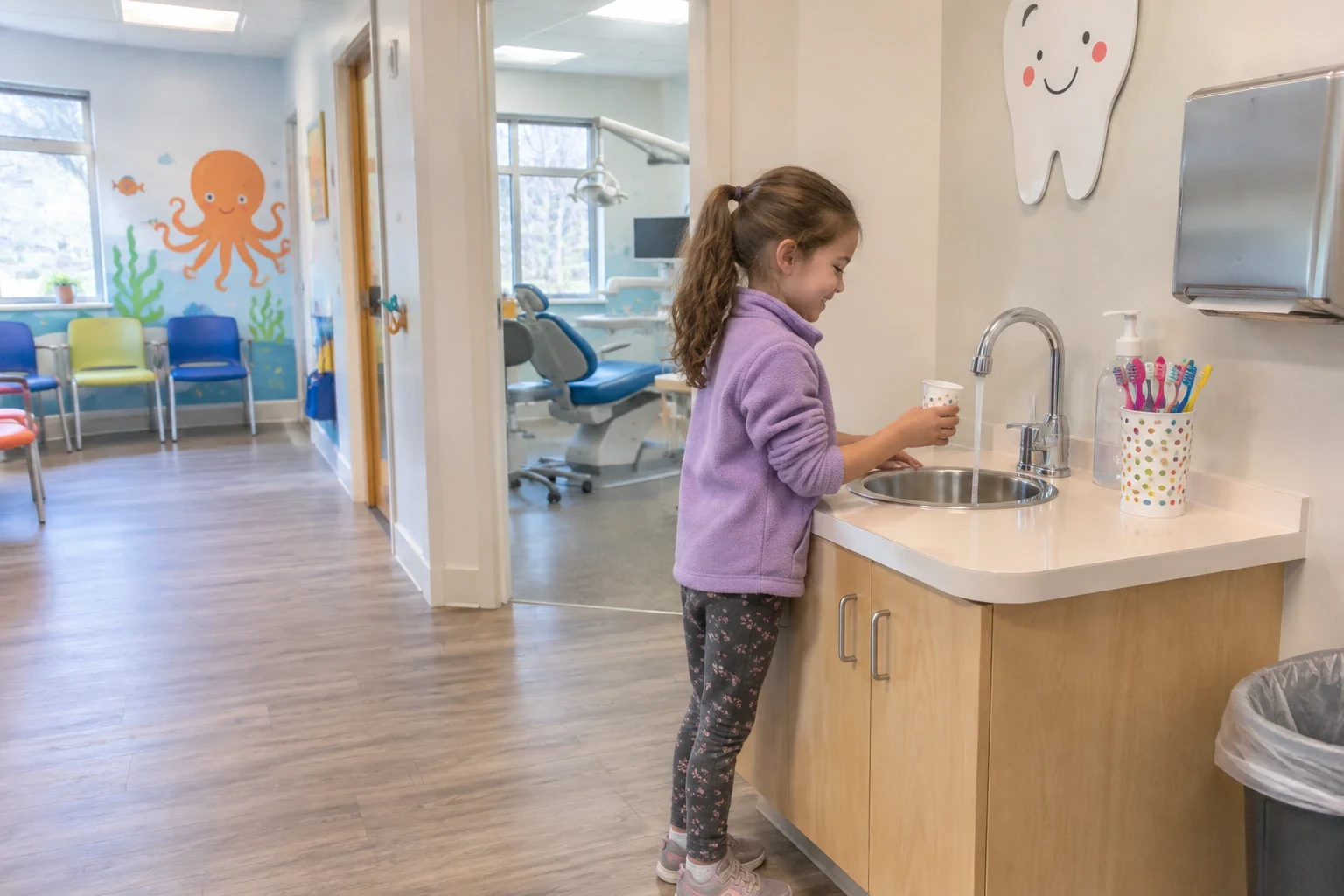
- A soft rubber cup and a mildly gritty paste smooth the tooth surfaces so new plaque has a harder time sticking. We floss between every contact point, which also shows us where gums bleed and need more attention at the sink.
- Tooth-by-tooth exam
- With a small mirror and good light, we look at every surface of every tooth, the gums, tongue, cheeks and the roof of the mouth. We check the deep grooves on molars, where decay often starts, and the spaces between teeth that touch.
- X-rays when they are due
- Bitewing X-rays show decay hiding between back teeth that the eye cannot see. We take them only when your child's age, history and risk call for them, and we use a lead apron and a thyroid collar.
- Growth and bite check
- We follow which baby teeth are loose, which adult teeth are on the way and how the upper and lower teeth meet. Crowding or a crossbite is easier to plan for when we spot it early.
- A plain-language recap
- Before you leave, we tell you what we saw, show you any spots worth watching and give you one or two brushing or diet changes that will help most. If your child needs fluoride treatment or sealants, we explain why.
Signs Your Child Is Due for a Visit
Six months have passed
That is about the time it takes for tartar to form and for an early white spot to start turning into a cavity. Kids who have had cavities before may need to come in sooner.
White or brown spots on teeth
Chalky white bands along the gumline are often decay in its earliest stage. Brown or darker patches can mean the enamel has already broken down.
Gums bleed at brushing time
Bleeding usually points to plaque resting along the gumline and inflaming the tissue. A cleaning plus a small change in brushing angle tends to calm it.
Wincing at cold or sweets
Pain from ice cream or juice can signal thin enamel or a cavity that has reached the softer dentin below. Better to have it checked before it turns into a toothache.
A baby with new teeth
Plan your baby's first visit for when they turn one, or no more than six months after that first tooth breaks through. The appointment is brief and mostly about getting comfortable with us.
What Moves the Price of a Checkup
Routine exams and cleanings are usually treated as preventive care, and many insurance plans pay for two of them a year. What you owe depends on what your child needs on that particular visit and on the rules of your plan. For payment, we take Visa, MasterCard and Discover cards, most insurance plans, and the CareCredit Patient Payment Plan.
First visit or a return visit
Your child's first exam with us runs longer because we chart every tooth and record their dental and medical history. Each checkup after that is measured against that baseline.
X-rays on the schedule or not
Bitewing films are typically needed every one to two years, so plenty of visits include none. A visit where they are taken costs more than one without.
Extra preventive steps
Newly erupted molars may be ready for sealants, or your child may benefit from fluoride varnish at the same chair time. Nothing gets added until we have told you about it.
How your plan is written
Insurers set different limits on cleanings per year and on how often X-rays are paid for. When you call to register, we can look into your coverage for you.
How the Appointment Runs
- 1
Getting settled
Your child meets the same team member who will stay with them through the visit. We show them the mirror, the water spray and the tickly toothbrush before anything goes in their mouth, so nothing is a surprise.
- 2
Cleaning first
We start with the cleaning, which most kids find easy. For babies and young toddlers, we often do a knee-to-knee exam with your child's head in our lap and their body on yours.
- 3
Exam and any X-rays
The dentist checks each tooth, the gums and the bite. If X-rays are due, we take them now and look at them with you on the screen.
- 4
Talking it over
You hear what we found, what is fine and what to watch. If treatment like a filling is needed, we explain the options and set up a separate appointment so today's visit stays short.
What Parents Want to Know Before a Checkup
How many checkups a year does my child need?
Two a year, about six months apart, suits most kids. A child with several past cavities, braces on the horizon or a hard time brushing thoroughly may do better on a three- or four-month cycle. We set the interval from what we actually find in your child's mouth rather than a blanket rule.
What do you do when a child is scared of the dentist?
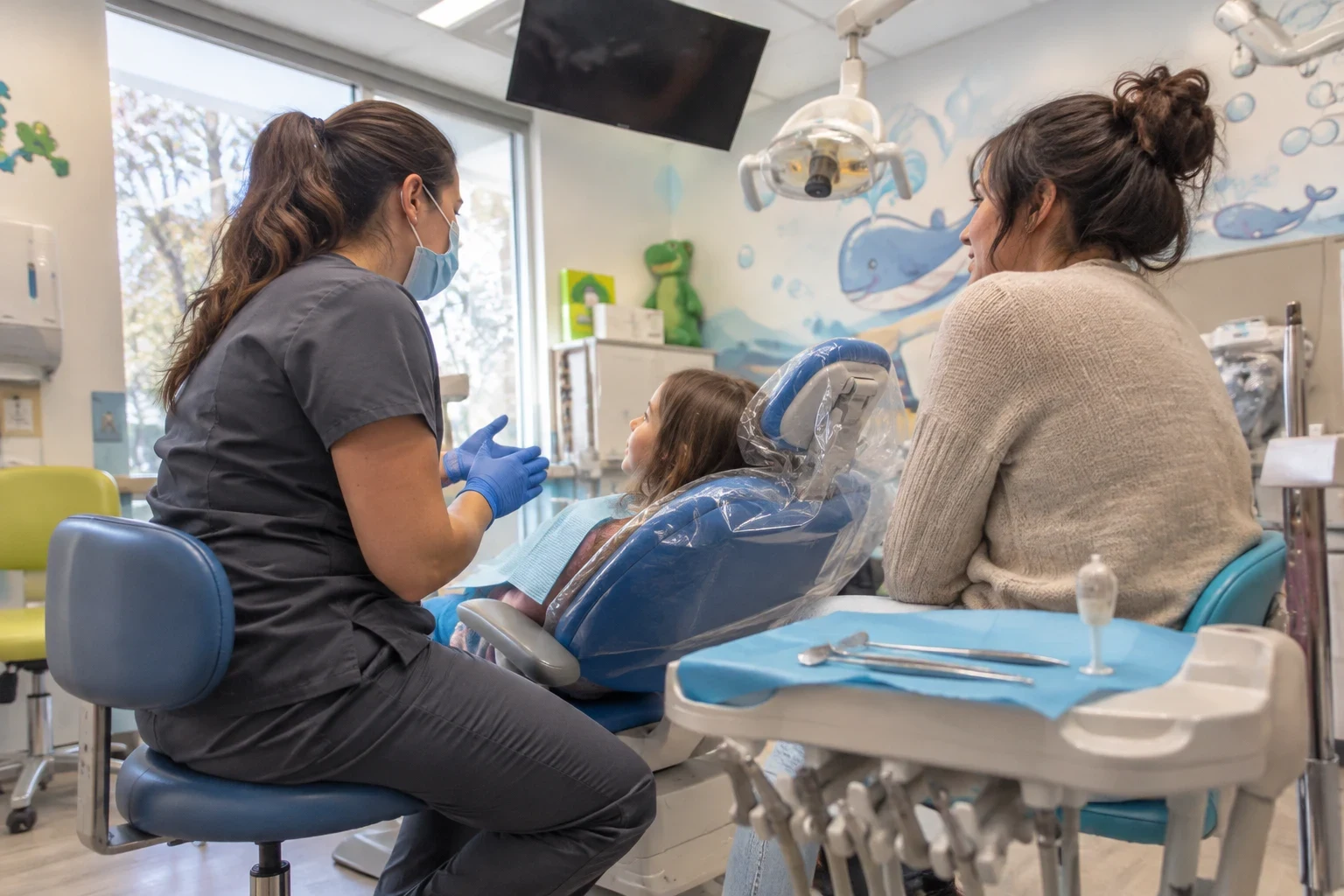
We slow down and show each instrument before it touches a tooth. Having the same people at every visit makes a real difference, because kids relax around faces they recognize. For a child whose fear is severe enough to get in the way of treatment, we can discuss sedation dentistry with you as a separate step.
Is it okay for me to be in the room?
Of course. Lots of parents sit close by, and with babies and toddlers you take part in the exam itself. Some older children are more relaxed without a parent watching, and we can decide that with you.
How safe are dental X-rays for children?
Bitewing films involve a very low radiation dose, and we only take them when the image will answer a real question. Every time, your child is covered with a lead apron and a thyroid collar.
What happens if the exam turns up a cavity?
We point out exactly where it is and tell you whether it can be monitored, firmed up with fluoride or needs a filling. Any treatment goes on a separate day so the checkup stays short, and you hear the cost before you schedule.
Does it matter if our family drinks well water?
It does. Private wells frequently carry little or no fluoride, so your child's enamel gets less daily protection. Telling us helps us judge whether fluoride treatment is worth adding.
Get Your Child on the Checkup Schedule
A short phone call gets your child registered and booked with the team they will keep seeing. Have your insurance card handy and we will take it from there.