ServicesSealants
Dental Sealants for Kids in Plympton
Sealants fill the narrow pits and grooves on your child's back teeth with a thin layer of resin, so food and bacteria have nowhere to settle. The visit needs no drilling and no numbing, and the same small team handles your child from the first check to the final bite test.
What a Sealant Does and When It Makes Sense
The chewing surface of a molar is not flat. It is folded into fissures, some narrower than a single toothbrush bristle. Plaque packs into those folds, bacteria ferment sugars there, and the acid they produce softens enamel from the inside of the groove outward. That is why most cavities in school-age kids start on the biting surface of the back teeth.
A sealant is a flowable resin that runs into those fissures and hardens, turning a deep groove into a shallow, smooth surface your child can actually brush clean. We usually recommend it when the first permanent molars come in, around age 6, and again when the second molars arrive, around age 12. Some baby molars with very deep grooves are worth sealing too.
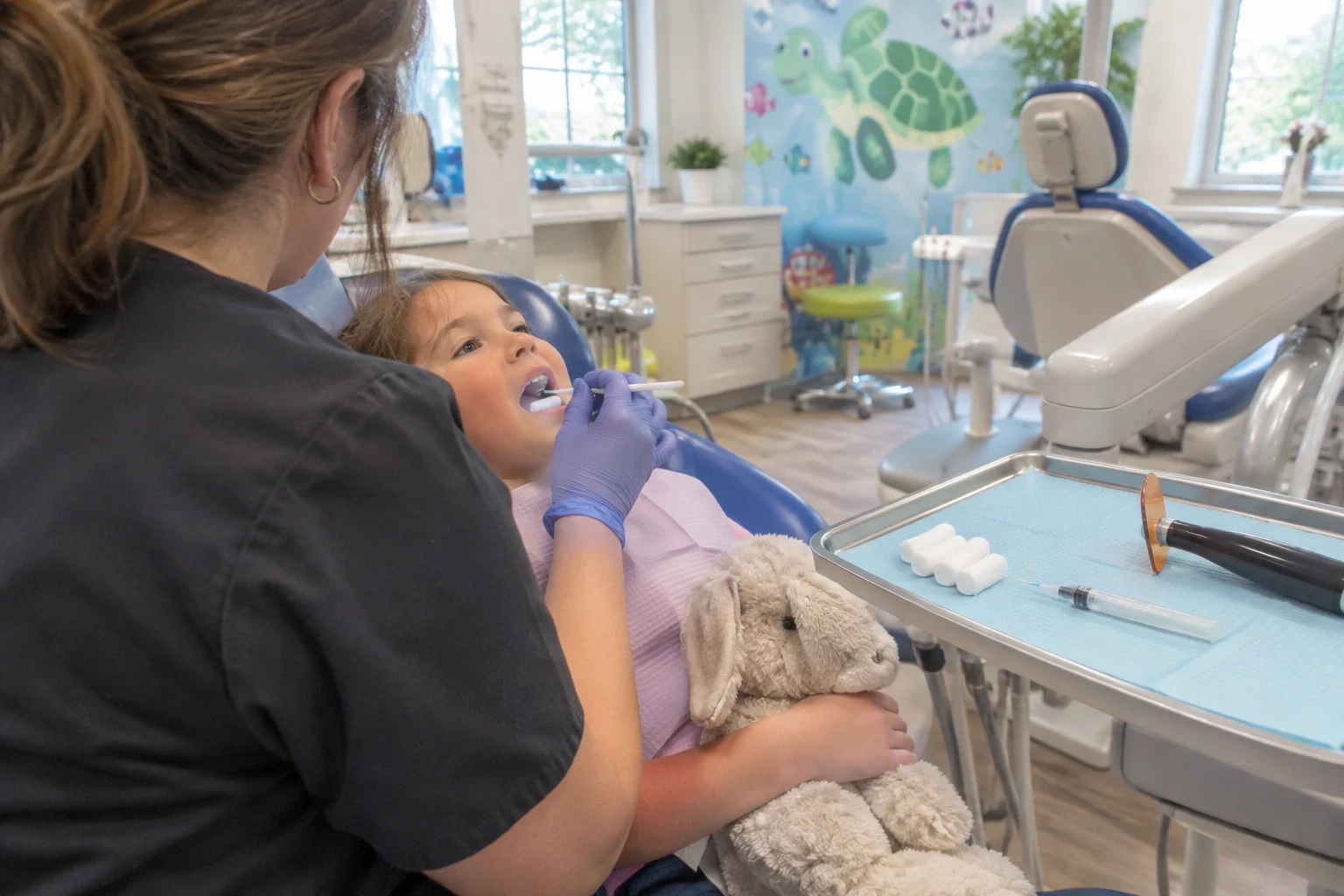
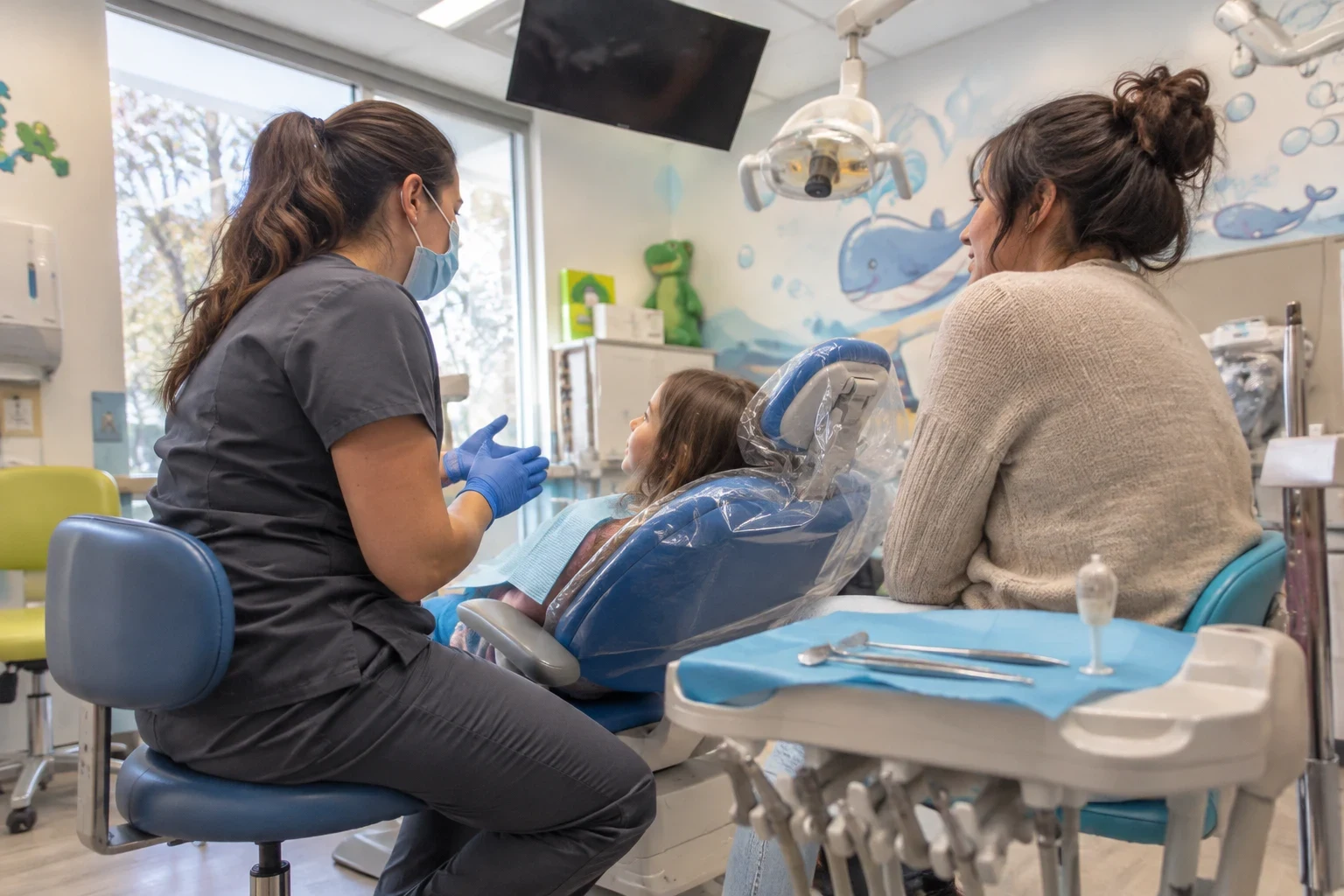
Because our team is small, the dental assistant who checks your child's grooves at the exam is usually the one who places the sealant, and the same dentist reviews it at later checkups. That continuity helps nervous kids, and it means someone who has seen the tooth before notices when a sealant starts to wear.
What Is Included in a Sealant Visit
Groove check before anything is applied
The dentist examines each molar for staining, softness or early decay. A sealant only goes over sound enamel. If a groove already has a small cavity, we explain that it needs a filling instead and why.
Cleaning the surface
Plaque and food debris are polished out of the fissures. Resin will not bond well to a dirty surface, so this step matters more than it looks.
Keeping the tooth dry
Saliva is the main reason sealants fail. We isolate the tooth with cotton rolls or a small isolation device so the surface stays dry while the resin goes on.
Etch, apply and cure
A mild etching gel roughens the enamel on a microscopic level so the resin can grip it. After a rinse and dry, the resin is painted into the grooves and hardened with a blue curing light in about 20 seconds per tooth.
Bite check and follow-up at exams
We check that your child's bite feels normal and that the sealant edges are smooth. At each regular exam and cleaning we look at every sealant and touch up any that have chipped or thinned.
Signs Your Child May Be Ready for Sealants
- New molars just came in
- The first permanent molars erupt behind the baby teeth around age 6, often without parents noticing. Freshly erupted enamel is less mineralized and more prone to decay, so sealing early protects it during its weakest years.
- Deep or stained grooves
- Dark lines in the grooves of the back teeth can be stain or early decay. Either way, deep fissures trap plaque and are good candidates for a sealant once we confirm the enamel is sound.
- A history of cavities
- If your child has already had fillings, the conditions that caused them are often still present. Sealing the untouched molars lowers the chance of the next cavity.
- Brushing that misses the back
- Kids tend to brush the front teeth well and skip the molars. If you see plaque or food left on the chewing surfaces, a sealant gives those teeth a surface that is easier to clean.
How the Appointment Goes
- 1
Quick exam and explanation
We look at the molars, tell you which ones we suggest sealing, and show your child the tools in plain terms. Nothing is a surprise.
- 2
Prepare and isolate each tooth
Each molar is cleaned, kept dry and etched. Most kids describe the etching gel as sour, and it is rinsed away within seconds.
- 3
Place and harden the sealant
The resin is flowed into the grooves and cured with the light. Four molars typically take well under an hour, and no needles or drilling are involved.
- 4
Bite check and back to normal
We confirm the bite and smooth any high spots. Your child can eat and drink right after the visit.
What Affects the Cost of Sealants
Sealants are charged tooth by tooth, so the main thing that sets the total is how many molars need one. Before any resin goes on, we walk you through which teeth we suggest sealing and the reason for each. For payment, you can use a Visa, MasterCard or Discover card, and we work with most insurance plans as well as the CareCredit Patient Payment Plan.
- How many teeth are sealed
- Covering the two first molars costs less than covering all eight permanent molars. Plenty of families do the first molars around age 6 and come back for the second molars several years later.
- What the grooves look like
- When a fissure already shows early decay, a plain sealant is no longer the right fit. That tooth may need a small preventive resin restoration or a filling, which is a separate procedure with its own cost.
- Your plan's coverage limits
- Many dental plans pay for sealants only on permanent molars and only until a set age. We can go through your plan's listed benefits with you, but the insurer decides what it covers.
- Upkeep down the road
- Chewing can chip a sealant over time. Patching one is usually a quick step, and spotting the wear early at a routine exam keeps the fix small.
Sealant Questions Parents Ask
- Does getting a sealant hurt?
- No. There is no drilling and no numbing shot. Your child will feel the tooth being cleaned and dried, taste a sour gel for a moment and see a blue light. Most kids are more bothered by keeping their mouth open than by anything we do.
- How long do sealants last?
- A well-placed sealant can stay on for several years, but chewing slowly wears it down. We check each one at every exam and cleaning and reapply resin where it has thinned or chipped. That regular check is the reason sealants keep working.
- Should baby teeth be sealed?
- Sometimes. Baby molars stay in place until around age 10 to 12, so a deep-grooved baby molar in a cavity-prone child can benefit. We decide tooth by tooth and explain our reasoning.
- If my child gets fluoride, do they still need sealants?
- The two do different jobs. Fluoride treatment strengthens enamel across the smooth surfaces of every tooth, while a sealant physically blocks the narrow grooves that fluoride has trouble protecting. Many kids benefit from both.
- Can my child eat right after?
- Yes. The resin is fully hardened by the curing light before your child leaves the chair. We do suggest avoiding very hard or sticky candy that can pull at sealant edges over time.
- Do you see kids from outside Plympton?
- Yes. Families come to us from Kingston, Halifax, Carver and other nearby towns. Sealant visits are short, so they fit easily around a school day.
Protect Those New Molars Early
The best time to seal a molar is soon after it comes in, before decay has a chance to start in the grooves. Give us a call and we will get your child registered and set up a visit with our team.