ServicesPediatric Crowns
Pediatric Crowns in Plympton
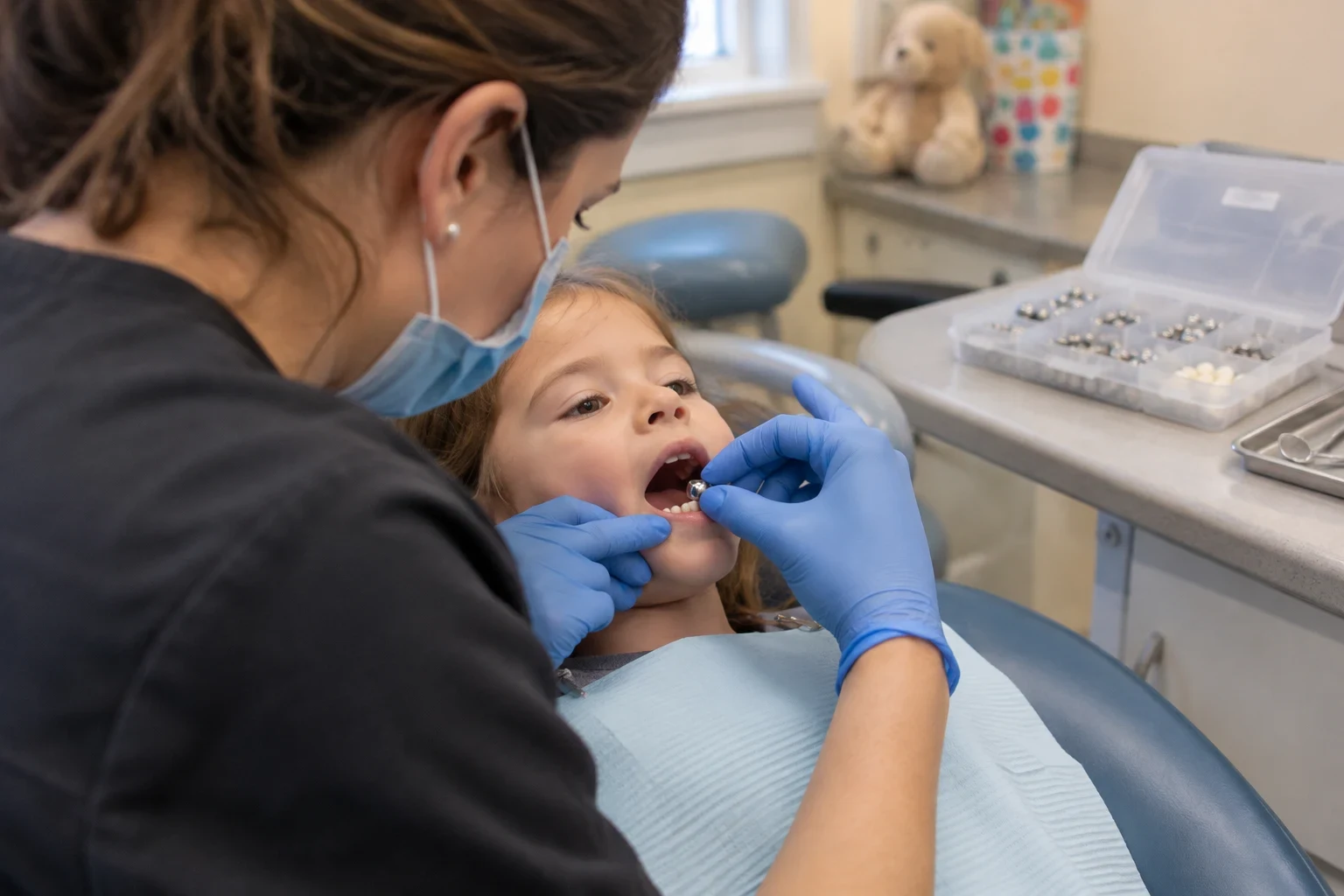
Once decay or a fracture leaves a baby tooth with too little sound structure, a big filling won't last. A crown caps the entire tooth so your child keeps chewing on it until it loosens naturally. We place stainless steel and tooth-colored crowns, with one dentist and assistant handling every step.
When a crown is the better choice than a filling
Baby teeth have much thinner enamel than adult teeth, and the nerve sits close to the surface. Once a cavity spreads across two or more surfaces of a primary molar, a large filling has little healthy tooth to grip. It tends to crack or leak at its edges, and decay starts again underneath. A crown wraps the remaining tooth in a single shell, so chewing forces spread evenly and new decay has no seam to slip under.
Keeping that tooth matters. Primary molars hold the space for the premolars developing beneath them. Lose one too early and the neighboring teeth can tip into the gap, crowding the adult tooth out of its path.
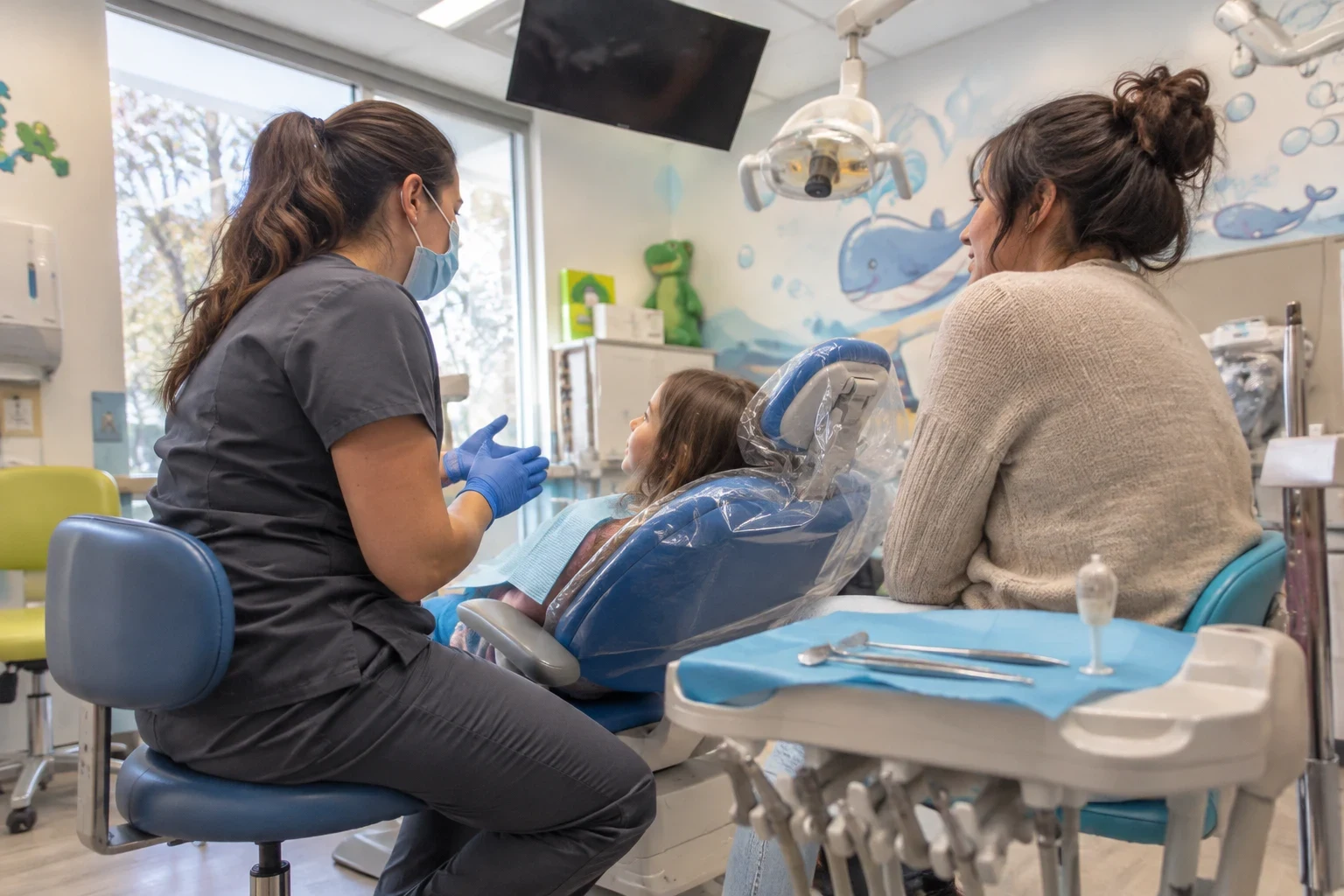
Our office is small on purpose. The dentist who examines your child and explains the options is the one who places the crown, with the same assistant in the room, so your child sees familiar faces from the first look to the final bite check.
What crown treatment includes
- Stainless steel crowns for back teeth
- Preformed stainless steel crowns are the most proven option for primary molars. They are thin, strong and flexible enough to snap over the natural bulge of the tooth. Once seated, they rarely need replacing before the tooth comes out.
- Tooth-colored zirconia crowns
- Zirconia is a white ceramic that looks like natural enamel. It does not flex, so the tooth needs more shaping and must stay completely dry while the crown is cemented. We recommend it when the tooth and your child are a good fit for it.
- Strip crowns for front teeth
- For decayed upper front baby teeth, we can rebuild the tooth with tooth-colored composite resin poured into a thin clear form, then peel the form away. This works best when enough tooth remains for the resin to bond to.
- Nerve treatment when needed
- If decay has reached the pulp, we remove the infected nerve tissue from the top of the tooth, a step called a pulpotomy, before the crown goes on. Our Root Canals page explains this in more detail.
- Numbing and comfort options
- Most crowns are done with local anesthetic alone. For very young kids, several teeth at once, or a child with strong anxiety, we talk through sedation dentistry with you before the visit.
- Follow-up at regular checkups
- At each exam and cleaning, we check the crown margins, the gums around it and the bite until the tooth falls out on its own.
When a baby tooth is ready for full coverage
Decay across several surfaces
Once a cavity wraps around more than one side of a molar, or X-rays show it sitting close to the pulp, too little healthy tooth remains to hold a filling for long. That is usually the point where we start talking about a crown.
A filling that keeps failing
Maybe an old filling cracked, came out, or new decay crept in along its margins. Each of those means the seam between filling and tooth is weak. Covering the entire tooth removes that seam altogether.
A cracked or broken tooth
Falls on the playground and biting down on a hard candy can split a back molar or snap off part of a front tooth. A cap protects what is left and stops the fracture from running deeper.
Enamel that looks chalky, soft or stained
Some teeth form with thin, underdeveloped enamel, a condition called enamel hypoplasia. That enamel wears and decays fast, so a crown holds up far better than repeated patch jobs.
Lingering ache with cold or chewing
An ache that stays after a cold drink, or soreness when your child bites, can mean decay is nearing the nerve. Schedule an exam with X-rays before it progresses.
What affects the cost of a pediatric crown
After the exam and X-rays, we go over the cost of your child's treatment before anything begins. A handful of factors set that number, and we can name them now. For payment, we take MasterCard, Visa and Discover, work with most insurance plans, and offer the CareCredit Patient Payment Plan.
Crown material
A stainless steel crown is less expensive than a zirconia one. Some insurance plans pay for stainless steel on molars and count a tooth-colored crown as an upgrade.
How many teeth need crowns
Doing several teeth at one visit can cut down on trips to the office, but each tooth is listed separately on the estimate.
Nerve treatment
If decay has reached the pulp, the pulpotomy is an extra step and carries its own fee.
Sedation
When your child needs sedation to stay safe and comfortable through treatment, it is billed as its own service.
Your insurance plan
Plans differ on coverage, waiting periods and how often a tooth can be treated. Share your plan details with us and we will explain what it pays for.
How a crown visit goes
- 1
Exam and X-rays
We look at the tooth and take X-rays to see how deep the decay runs and how much root is left. Then we explain whether a filling, a crown or an extraction makes the most sense for that tooth, and why.
- 2
Numbing and isolation
We apply a topical gel first so the local anesthetic goes in more gently. A small rubber dam or isolation device keeps the tooth dry and keeps water and debris out of your child's throat.
- 3
Shaping and fitting
We remove all the decay, treat the nerve if needed, and trim the tooth just enough for the crown to seat. We try sizes until one fits snugly at the gumline and meets the opposing tooth correctly.
- 4
Cementing and bite check
The crown is cemented, and excess cement is cleared from between the teeth so it cannot irritate the gums. We check the bite and go over aftercare with you: soft foods until the numbness fades, and keeping an eye out so your child does not chew a numb lip or cheek.
Questions parents ask about crowns
Why put a crown on a tooth that will fall out anyway?
Many baby molars still have years of work ahead of them. If a decayed one is pulled early, the teeth on either side can drift into the opening, and your child may then need a space maintainer to save room for the adult tooth. A crown lets the natural tooth keep holding that space while your child chews normally.
Will a silver crown look strange?
A stainless steel crown on a back molar is mostly out of sight when your child talks or smiles, and most kids forget about it within a few days. If the look bothers you, ask about zirconia. We will give you a straight answer on whether that particular tooth suits it.
Does getting a crown hurt?
We numb the tooth completely, so your child feels pressure and some vibration, not pain. The gum tissue around the crown may be sore for a day or two after the tooth is shaped. A children's pain reliever, given the way your pediatrician recommends, usually takes care of it.
How long will the crown last?
A properly fitted stainless steel crown on a baby tooth normally stays put until the tooth gets loose on its own, and then the two come out together. Zirconia and strip crowns are more sensitive to bite forces and brushing habits, so we look at them carefully at every checkup.
What should we do if a crown comes loose?
Hold on to the crown if it turns up, and phone us to book a visit. We will examine the tooth under it, then either cement the same crown back in place or fit a new one.

Have the tooth looked at by the team that will treat it
If another dentist has mentioned a crown, or you have noticed a broken or darkened tooth, the first step is an exam with the people who will do the work. New patient registration happens by phone, and we set up the visit from there.