ServicesFillings
Children's Fillings in Plympton
A cavity in a baby tooth or a new adult molar keeps spreading until it is cleaned out and sealed. We remove the decay, rebuild the tooth with tooth-colored material and keep the same small team with your child from numbing to the final bite check.
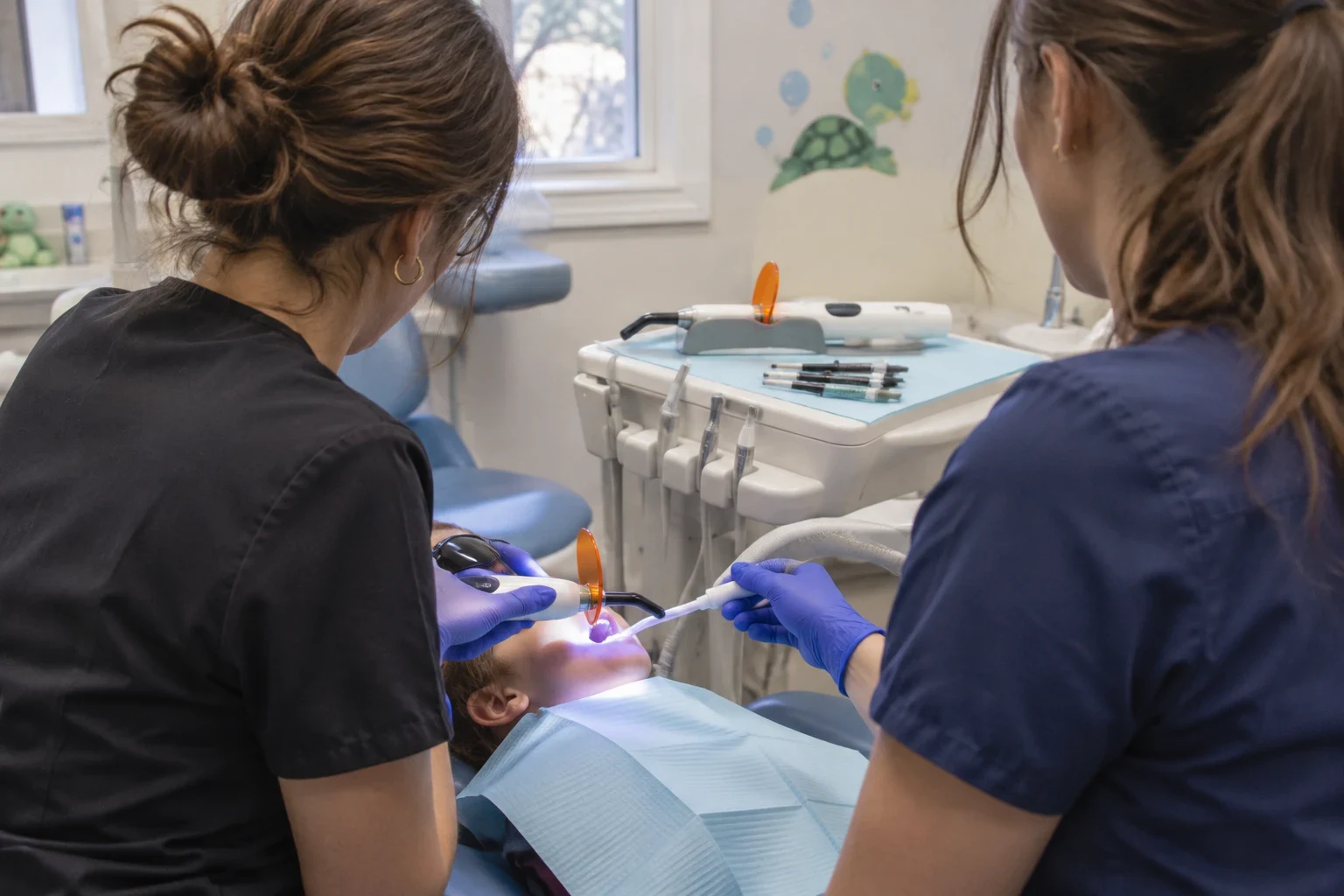
What a filling does for your child's tooth
A cavity starts when acid from mouth bacteria dissolves enamel, the hard outer shell of the tooth. Once it breaks through to the dentin underneath, it moves faster, because dentin is softer and full of tiny channels that lead toward the pulp, where the nerve lives. Baby teeth have thinner enamel than adult teeth, so decay can reach the pulp in months instead of years.
A filling stops that process. We remove the softened, infected tooth structure, then seal a durable material into the space so the tooth can chew normally and hold its place for the adult tooth coming in behind it. Catching a cavity at this stage usually means a short visit instead of a root canal or a pediatric crown later.
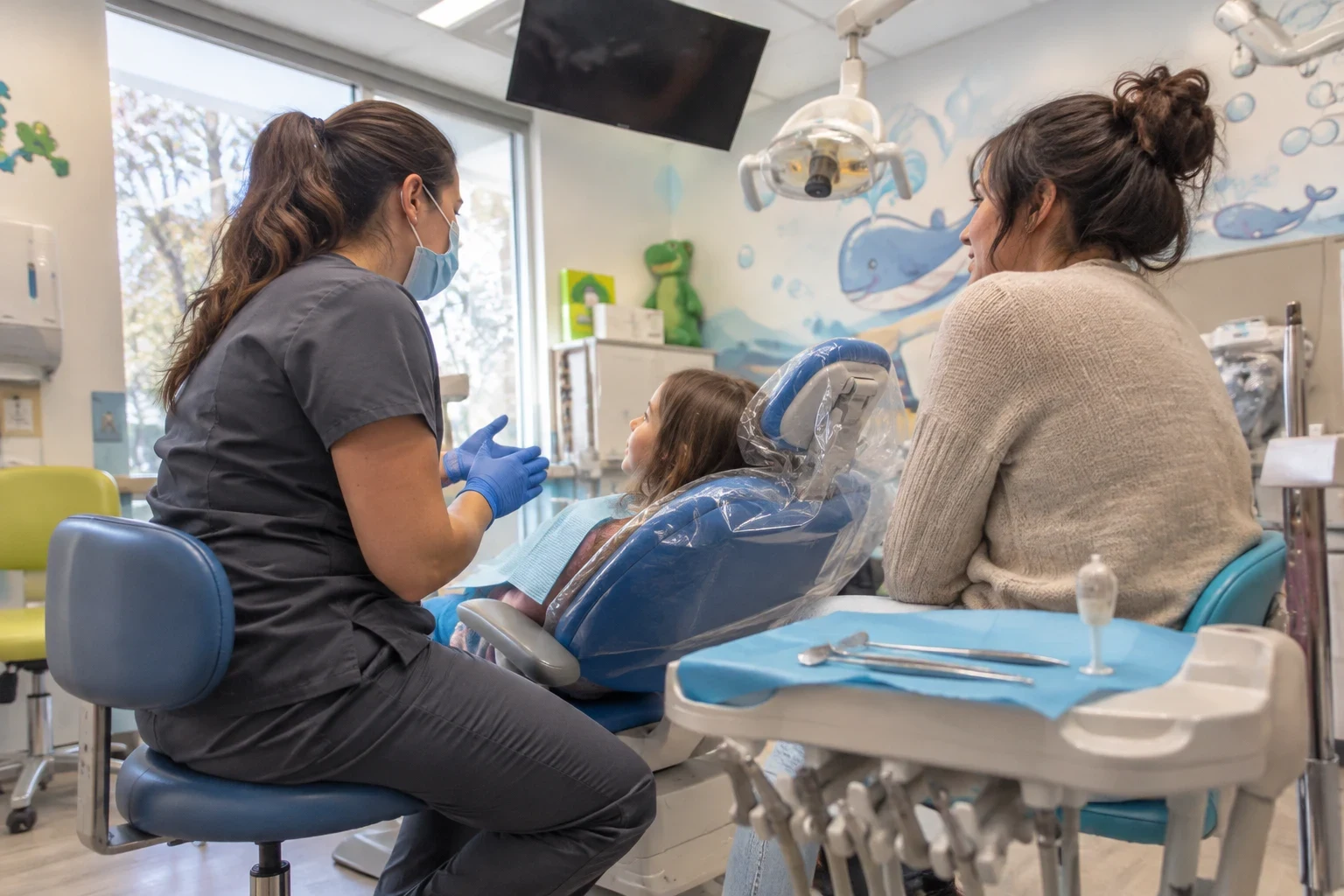
Parents often ask why we run visits the way we do. We keep one dentist and one assistant with your child for the whole appointment, so the person who explains the plan is the same person who finishes the work.
What's included in a filling visit
- 01
A clear look at the cavity first
We confirm the size and depth of the decay with an exam and, when needed, X-rays. We show you the images and point to what we found before any work starts.
- 02
Gentle numbing
We apply a numbing gel to the gum first, then give a little local anesthetic slowly. Going slow keeps the pressure low and most kids feel little more than a pinch.
- 03
Keeping the tooth dry
Resin-based materials do not grip a wet tooth well. We use cotton rolls, suction or a thin rubber shield to keep saliva away so the filling seals tightly to the enamel.
- 04
Tooth-colored materials
Most of our fillings are composite resin, a tooth-colored plastic reinforced with fine glass particles and hardened with a blue curing light. For some baby teeth we use glass ionomer, which holds well in tricky spots and releases a little fluoride over time.
- 05
Bite check and polish
We shape the filling to match the grooves of the tooth and check the bite with thin marking paper. A high spot left behind can make a tooth sore, so we adjust until it feels normal.
Questions about Fillings?
Call(781) 725-5936How a cavity tends to show up in kids
Dull white bands or dark grooves
A flat, matte white line along the gumline is often the earliest hint that enamel is losing minerals. Brown or black marks settled into the grooves of the back teeth can mean decay has already made it through the surface.
A zing from cold or sugar
If your child winces at candy, ice cream or a cold drink, the dentin under the enamel is likely exposed. That sharp reaction usually gets stronger as the decay goes deeper.
Food that keeps catching in one spot
Many cavities begin between the back molars, where bristles cannot get in. Food that wedges into the same place again and again can point to a hole forming there.
Chewing only on one side
Little kids rarely have the words for tooth pain. Moving food to one side of the mouth, eating more slowly or refusing a favorite food can all be clues that a tooth hurts.
Spotted at a routine visit
Early cavities are often painless. We frequently catch them during exams and cleanings, when they are still shallow and the treatment is at its simplest.
How the filling appointment runs
- 1
We talk with you and your child
The dentist explains, in kid-friendly words, what will happen and lets your child see the tools. You hear the plan in plain terms, including which tooth and which material.
- 2
Numbing and setup
After the gel and anesthetic take effect, we place the drying setup around the tooth. Many kids watch a show or hold a comfort item during this part.
- 3
Removing the decay
We clean out the soft, decayed tooth structure with a fine drill and hand instruments, keeping as much healthy tooth as possible. If decay turns out deeper than the X-ray showed, we stop and talk with you before going further.
- 4
Placing and shaping the filling
We apply an adhesive layer, add the filling material in thin layers and harden each one with the curing light. Then we smooth the surface and check the bite.
- 5
Aftercare
Your child can eat once the numbness fades, usually in two to three hours. We remind you to watch that your child does not chew a numb lip or cheek, which is the most common sore spot after a filling.
What affects the cost of a filling
The price depends on how much of the tooth the decay reached and how many teeth need work. We go over the plan and what your insurance is likely to cover before we begin, so there are no surprises at the front desk. For payment, you can use MasterCard, Visa or Discover, and we work with most insurance plans as well as the CareCredit Patient Payment Plan.
- Number of surfaces
- Each tooth has several surfaces. A shallow cavity on one surface takes less time and material than one wrapping from the chewing surface down between two teeth.
- Number of teeth
- Treating several cavities in one visit can mean fewer appointments overall, though the total for that visit will be higher.
- Material choice
- Composite resin and glass ionomer are priced differently, and insurance plans do not always treat them the same way.
- Comfort support
- Some kids need extra help to sit through treatment. Adding nitrous oxide or other options from our sedation dentistry service changes the cost.
What parents want to know before a filling
Baby teeth come out eventually. Is a filling really worth doing?
The baby molars in the back of the mouth often stay put until somewhere around ages 10 to 12. An untreated cavity in one of them can work its way to the nerve, turn into an infection and become painful. If the tooth is lost too soon, the teeth beside it can shift into the gap and crowd the adult tooth that needs that room.
Is getting a filling painful for kids?
We numb the tooth before any work begins, so your child should notice pressure and some vibration rather than pain. The anesthetic goes in slowly, and we check in with your child throughout. A little tenderness in the gum for about a day afterward is normal.
Which filling material will you use?
Most of the time we place tooth-colored composite resin, which bonds to the enamel and matches the tooth. Glass ionomer suits some baby teeth better, since it handles a bit of moisture and gives off fluoride over time. We explain our recommendation and the reason for it.
Is it okay to wait on a small cavity?
An early white spot where the enamel is still intact can sometimes be turned around with fluoride treatment and more careful brushing, and we will let you know if your child's tooth fits that picture. Once the enamel has actually broken open, the hole will not close by itself and usually gets bigger.
What if my child is very anxious about treatment?
We begin by calmly walking your child through each step, and breaks are always allowed. For kids who need extra support, our sedation dentistry options can make the visit easier. We are glad to go over them with you by phone or in person.
What helps prevent the next cavity?
Routine exams and cleanings let us spot trouble while it is small. Sealants cover the deep grooves on the back molars, and cutting back on sticky snacks and all-day sipping makes a real difference.
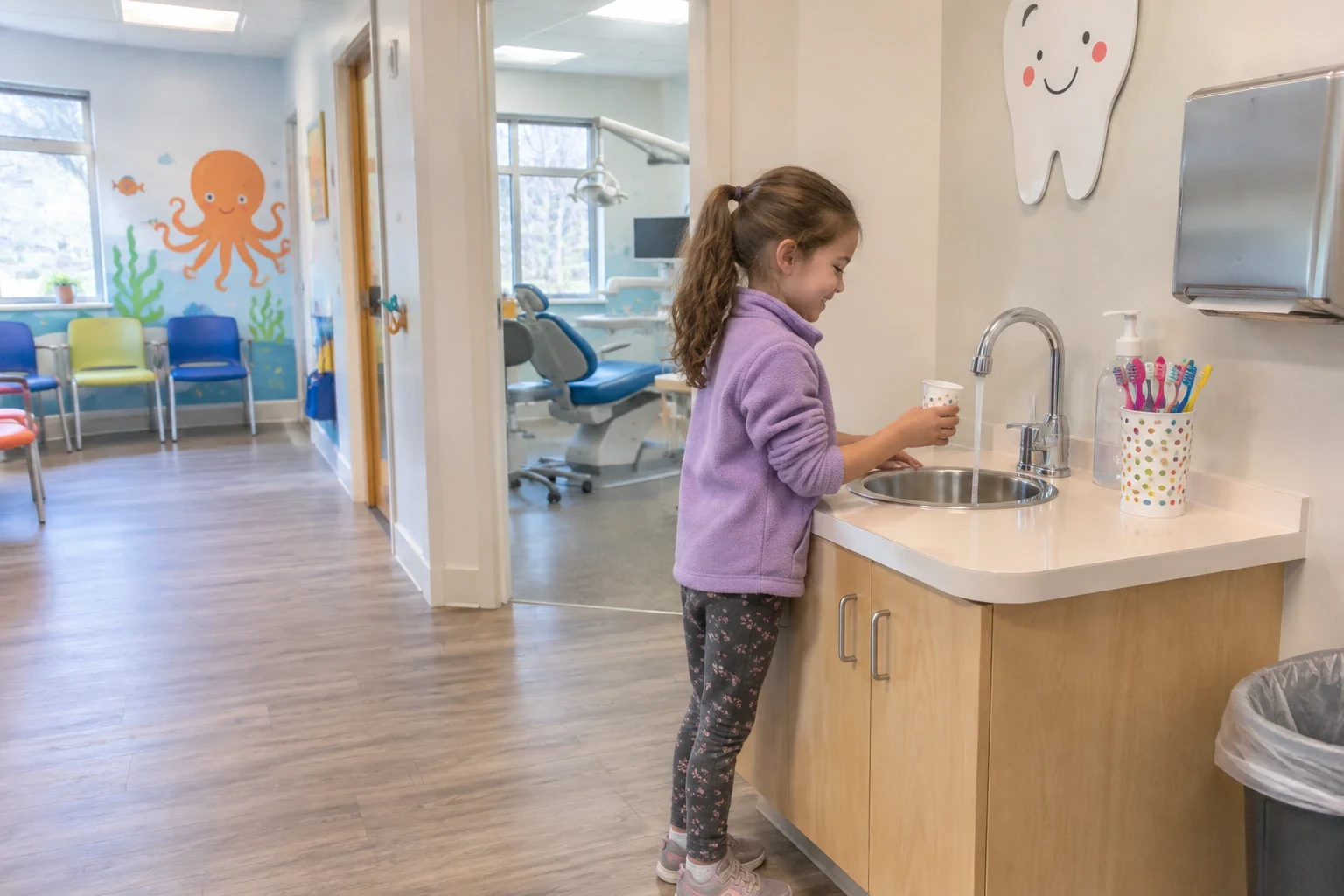
Get that cavity taken care of
Families come to us from Plympton, Kingston, Halifax, Carver and nearby towns. One phone call gets your child registered and on the schedule with the team that will see the filling through.