ServicesRoot Canals
Root Canals for Kids in Plympton
When decay reaches the nerve inside a tooth, we remove the inflamed or infected pulp, seal the tooth and usually cap it with a crown. Your child keeps a working tooth, the pain source is gone, and the same small team handles every visit.
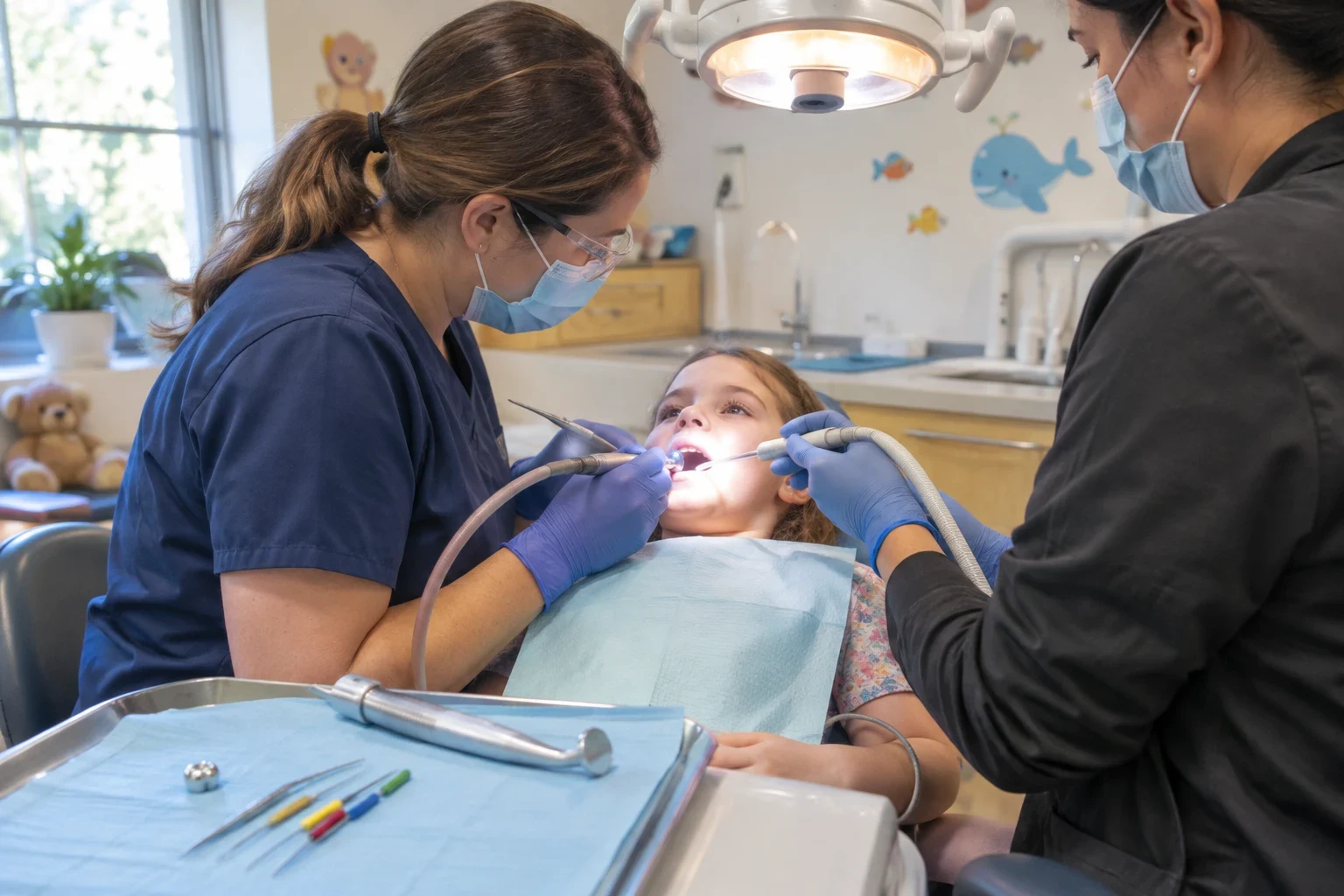
What a Root Canal Means for a Child's Tooth
Every tooth has a soft core called the pulp, made of nerve fibers and blood vessels. In baby teeth the enamel and dentin are thinner than in adult teeth, so a cavity can reach the pulp quickly. Once bacteria get there, the pulp swells inside a hard shell with nowhere to expand, which is why the ache can feel out of proportion to the size of the hole.
For kids we use two main treatments. A pulpotomy removes only the infected pulp in the crown of the tooth and leaves the healthy root pulp alive under a medicated dressing. A pulpectomy removes pulp from the roots as well and fills the canals with a paste that dissolves naturally as the adult tooth pushes up. Teens with infected permanent teeth get a conventional root canal filled with a permanent material.
Saving the tooth matters because baby molars hold space for adult teeth and do much of the chewing until about age 10 to 12. Families from Plympton, Kingston and Halifax come to us so the same people who find the problem also treat it and check the healing afterward.
What Root Canal Treatment Includes
- X-rays and pulp testing
- We take X-rays to see how close the decay is to the nerve and whether infection has reached the bone around the roots. That tells us whether a pulpotomy is enough or the whole canal needs cleaning.
- Numbing done slowly
- We apply a numbing gel first, then give local anesthetic at a slow, steady pace so your child feels pressure rather than a pinch. We explain each step in kid-friendly words before we do it.
- Pulp removal and medicating
- Infected pulp is removed with small instruments, the chamber is rinsed, and a medicated material is placed to calm and protect the remaining tissue. For a pulpectomy, the canals are filled with a resorbable paste.
- A crown to protect the tooth
- A treated baby molar has lost much of its structure and can crack under chewing force. Most need a crown, often stainless steel on back teeth or tooth-colored zirconia where it shows. Our Pediatric Crowns page explains the choices.
- Follow-up checks
- We recheck the tooth at regular exams and take X-rays when needed to confirm the bone around the roots is healthy.
Signs Your Child May Need a Root Canal
Pain that wakes them up
A toothache that starts on its own or keeps your child up at night often means the pulp is inflamed, not just the enamel.
Lingering sensitivity
Cold or sweet sensitivity that lasts more than a few seconds after the food is gone points to nerve involvement rather than a shallow cavity.
A pimple on the gum
A small bump near a tooth that drains or keeps coming back is a sign of infection at the root tip. It may not hurt, but it still needs treatment.
Swelling in the cheek or gum
Puffiness around a tooth means infection is spreading into nearby tissue. Let us know when you phone so we can see your child promptly.
A gray or darkened tooth
After a fall or bump, a front tooth that turns gray may have a damaged nerve. Some recover and some need treatment, so we watch it with X-rays.
What Affects the Cost
The price depends on how far the infection has spread and what the tooth needs to keep working. We go over the plan and the costs with you before any treatment starts. Visa, Discover and MasterCard cards are all fine here, most insurance plans are accepted, and the CareCredit Patient Payment Plan is another option.
Type of pulp treatment
A pulpotomy takes less time and material than a pulpectomy. A root canal on a permanent tooth has more canals to clean and more steps than either.
Crown material
Stainless steel and zirconia crowns are priced differently. Front and back teeth also have different crown options.
How many teeth
Treating two or more teeth in one visit changes chair time and materials, though it can mean fewer appointments overall.
Sedation
If your child needs sedation to stay still and comfortable, that adds to the cost of the visit.
Your insurance coverage
Plans vary in how they cover pulp treatment and crowns. When you phone, we can tell you what your plan usually covers.
How the Visit Goes
- 1
Exam and plan
We examine the tooth, review X-rays and walk you through whether it needs a pulpotomy, pulpectomy or extraction. You get the plan and the reasons before anything starts.
- 2
Getting comfortable
Your child picks a show or music, and we numb the area. For kids who are very anxious or need several teeth treated, we can talk through options on our Sedation Dentistry page.
- 3
Treatment
We isolate the tooth to keep it dry, remove the decay and infected pulp, and place the medicated filling. A pulpotomy on one baby molar usually fits inside a normal appointment.
- 4
Crown and home care
The crown is usually placed at the same visit. Lips and cheek stay numb for a couple of hours, so we ask you to watch for biting and offer soft foods until feeling returns.
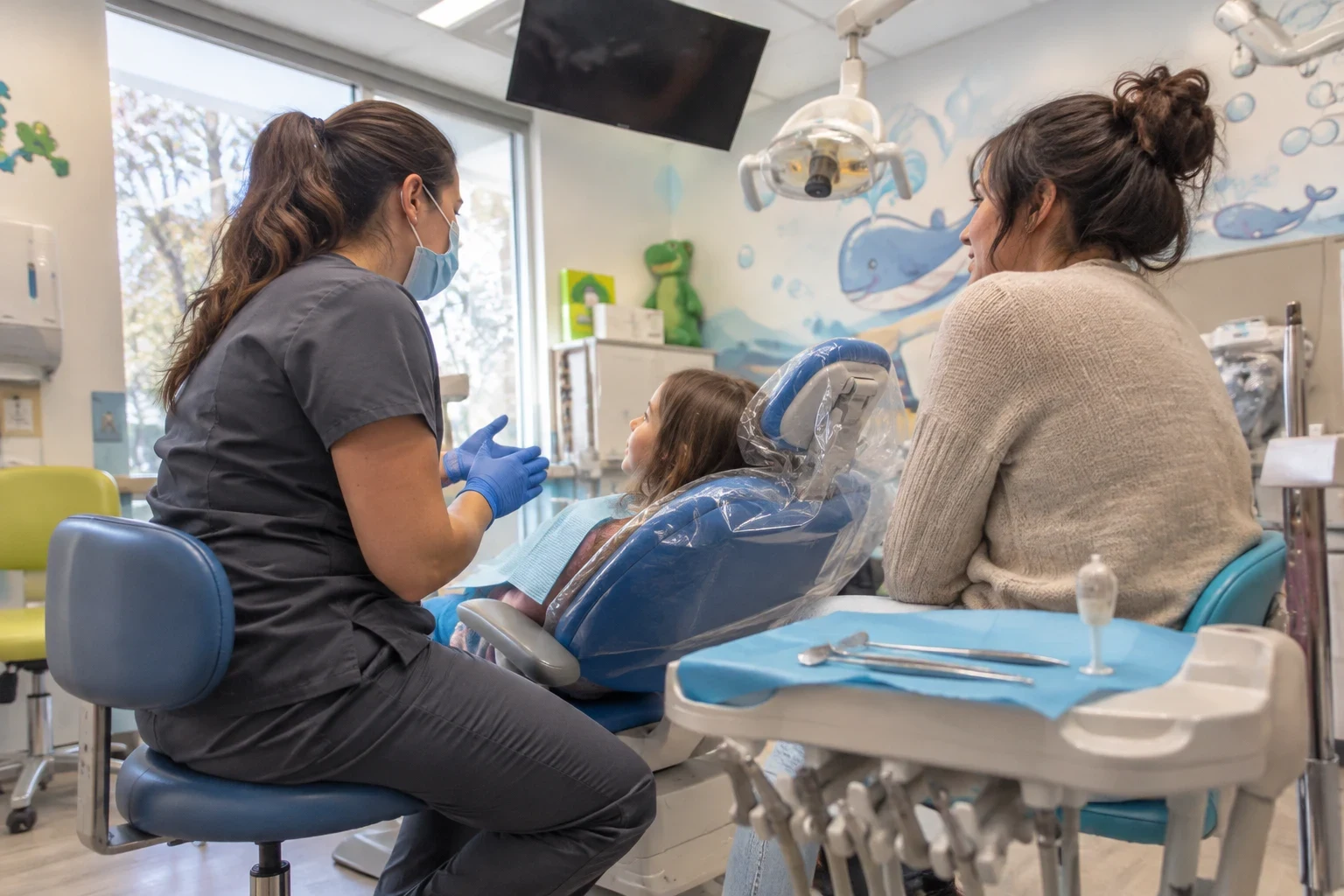
Root Canal Questions From Parents
Why treat a baby tooth that is going to fall out anyway?
Baby molars often stay until age 10 to 12. Losing one early lets neighboring teeth drift into the gap, which can block the adult tooth and lead to crowding. An untreated infection can also harm the developing adult tooth underneath.
Will it hurt?
The tooth is numb during treatment, so most kids feel pressure and vibration rather than pain. Afterward some soreness for a day or two is common, and children's pain reliever is usually enough. The deep toothache from the infection typically settles once the pulp is treated.
Would pulling the tooth be simpler?
Sometimes, yes. If the root is badly resorbed, the infection is extensive, or the adult tooth is close to coming in, we may recommend an extraction instead. If an early extraction leaves a gap, a space maintainer can hold room for the adult tooth.
How long does it take?
A pulpotomy with a crown on one tooth usually fits in a single appointment. A pulpectomy or a permanent tooth root canal may take longer or need a second visit.
Can my child go back to school the same day?
Most kids can. The main things to watch are the numb lip and cheek for the first couple of hours, and choosing soft food that evening.
Get Your Child's Tooth Looked At
If your child has a toothache, a gum bump or a darkened tooth, phone us. We will set up a visit, find the cause and explain your options before any treatment begins.