ServicesSedation Dentistry
Sedation Dentistry in Plympton
When a child is too anxious, too young or needs too much work to sit still safely, sedation lets us finish treatment calmly. We review your child's health history first, explain each option plainly, and the same small team stays with your child from check-in through recovery.
What sedation does and when it is the right call
Sedation does not replace numbing. Local anesthetic blocks pain at the tooth. Sedation works on the nervous system to lower fear, slow the gag reflex and keep small bodies still, which matters when a dentist is working with a drill a few millimeters from the cheek and tongue.
Most kids never need it. A gentle approach, short appointments and clear explanations get most children through fillings and cleanings without any medication. We suggest sedation when the alternative is a struggling child, a treatment split across many visits, or work that simply cannot be done safely while your child is moving.
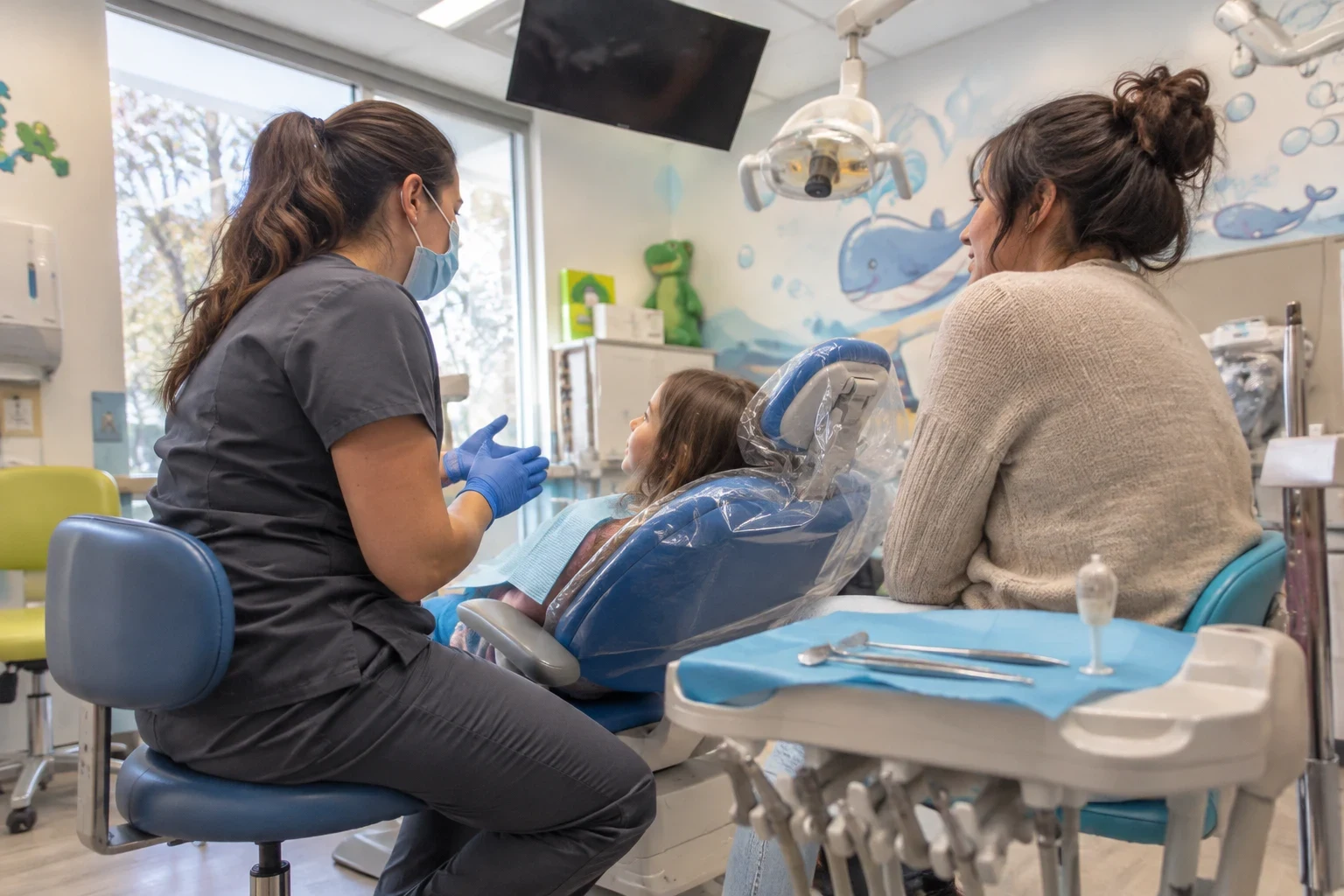
We keep the team small on purpose. The dentist and assistant who meet your child before treatment are the ones in the room during it and the ones watching recovery afterward. A familiar face at each step helps a nervous child settle, and nothing gets lost in a handoff.
What sedation care includes
Health history review
Before any sedative, we go over medications, allergies, breathing problems, snoring, recent colds and past reactions to anesthesia. Enlarged tonsils or a stuffy nose can change which option is safe, so we ask about them directly.
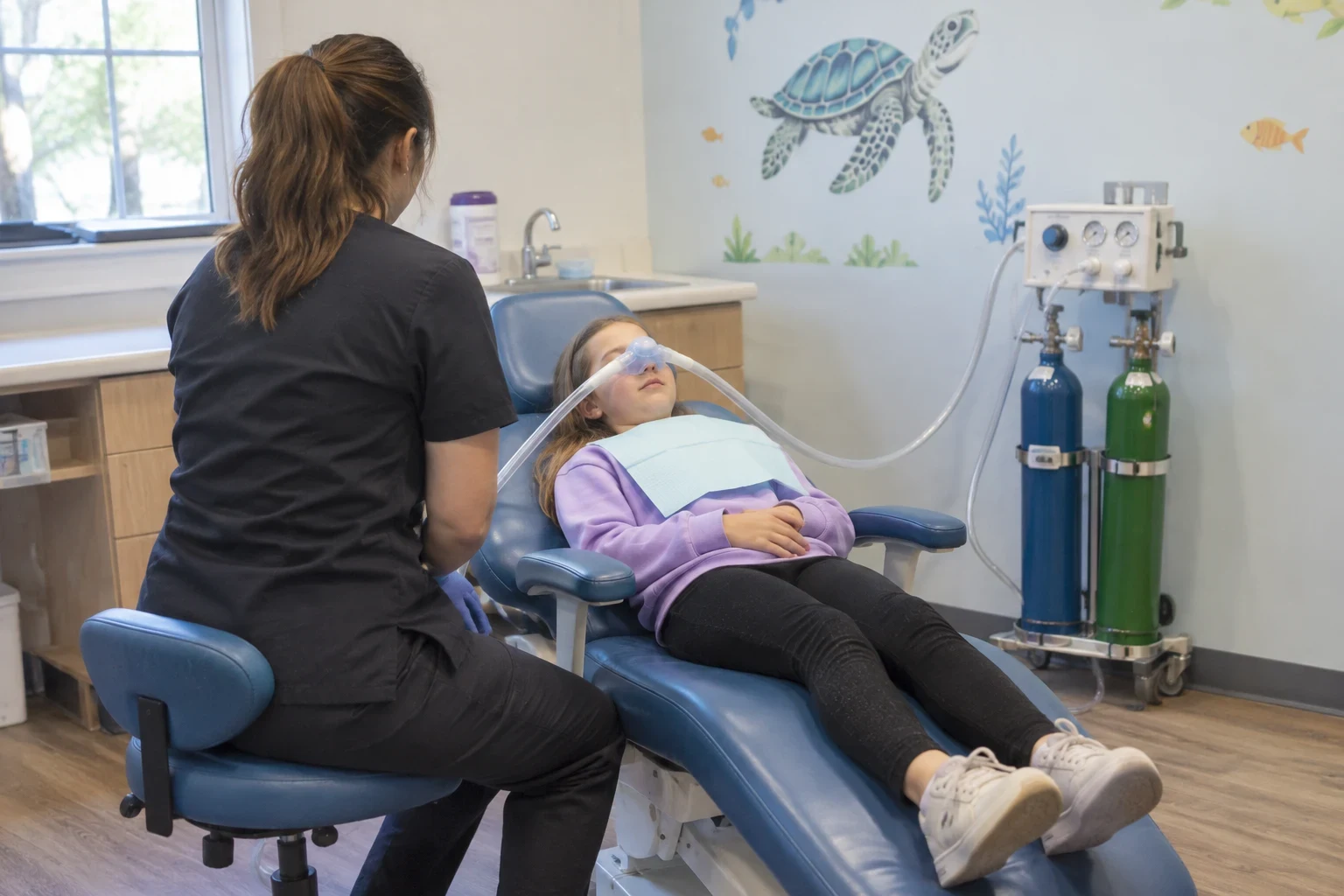
Nitrous oxide
Often called laughing gas, nitrous oxide is breathed through a small nose mask mixed with oxygen. It takes effect within minutes, keeps your child awake and responsive, and clears quickly once we switch to pure oxygen at the end.
Oral conscious sedation
For deeper anxiety or longer treatment, a measured liquid medication is given by mouth, with the dose based on your child's weight. Your child stays able to breathe on their own and respond, but feels drowsy and relaxed.
Continuous monitoring
A pulse oximeter on a finger or toe tracks oxygen level and heart rate throughout. A team member watches your child's breathing and color the whole time treatment is underway.
Recovery before you leave
Your child rests with us until they are alert enough to go. We give you written aftercare instructions covering food, drink, activity and what is normal for the rest of the day.
Signs your child may need sedation
- Fear that stops treatment
- Crying, kicking or refusing to open is not misbehavior. If fear makes treatment unsafe, sedation can turn a hard appointment into a manageable one.
- Several teeth need work
- When cavities are spread across both sides of the mouth, sedation can let us complete fillings or pediatric crowns in fewer, longer visits instead of many short ones.
- A very young child
- Toddlers cannot understand why they need to hold still. For a young child with decay that cannot wait, sedation may be the safest way to treat it.
- A strong gag reflex
- Some kids gag at mirrors, cotton rolls or the suction tip. Nitrous oxide often dulls that reflex enough to work comfortably on back teeth.
- Sensory or medical needs
- Children with sensory sensitivities, autism or certain medical conditions may find the lights, sounds and touch of a dental visit overwhelming. We plan sedation around what your child needs.
How a sedation visit runs
- 1
Planning conversation
We start with an exam and a talk about your child's teeth, health history and past dental visits. If sedation fits, we explain which type we recommend and why, and answer your questions before anything is scheduled.
- 2
Instructions for the day before
You get clear instructions on when your child must stop eating and drinking, since an empty stomach lowers the risk of vomiting under sedation. Dress your child in loose clothing with short sleeves.
- 3
Treatment day
We check weight, vitals and any new symptoms, then give the sedative. Once it takes effect, we numb the area and complete the planned work while monitoring breathing, oxygen and heart rate.
- 4
Recovery and the ride home
Your child recovers with the same people who treated them. Plan a quiet afternoon with an adult close by, soft foods and no climbing or bike riding until the drowsiness passes.
What affects the cost of sedation
Sedation is billed apart from the dental work it supports, so we go over both pieces with you before treatment. Your quote depends on what your child needs, and we explain it by phone or at the planning visit. For payment, we take MasterCard, Visa and Discover cards, work with most insurance plans, and offer financing through the CareCredit Patient Payment Plan.
- Type of sedation
- Nitrous oxide and oral conscious sedation use different medications, equipment and levels of monitoring, so they are priced differently.
- Length of treatment
- One small filling and a full round of crowns and fillings take very different amounts of chair time and monitoring time.
- Insurance coverage
- Some plans cover nitrous oxide or oral sedation only for certain ages or documented needs, and others leave it out entirely. We help you check what your plan actually says.
- Health history
- A child with asthma, sleep apnea or another condition may need an extra evaluation or a note from their pediatrician before sedation is scheduled.
Sedation dentistry questions from parents
- Is sedation safe for kids?
- Nitrous oxide and oral conscious sedation have long track records in pediatric dentistry when dosed by weight and monitored closely. The biggest safety steps happen before treatment: a careful health history, following eating and drinking instructions, and watching oxygen and heart rate the entire time. If anything in your child's history raises concern, we will tell you and talk through other options.
- Will my child be asleep?
- No. With nitrous oxide, your child stays awake and can talk with us. With oral sedation, kids often get very drowsy and may doze, but they still breathe on their own and respond to voice and touch. Many children remember little of the appointment afterward.
- Can I stay with my child?
- We will explain what happens at each step and when you can be with your child. Many parents stay during nitrous oxide visits. Either way, you will be close by, and you will be with your child during recovery.
- How long will my child be drowsy afterward?
- Nitrous oxide wears off within minutes after breathing pure oxygen, and most kids go back to normal activities the same day. Oral sedation lasts longer, so expect a sleepy afternoon. Keep your child close, offer liquids first and then soft foods, and skip activities that need balance until they are fully alert.
- What if my child has a cold on treatment day?
- A stuffy nose makes it hard to breathe through a nitrous mask, and congestion or a cough can raise risks under oral sedation. Phone us before the appointment if your child is sick. We would rather reschedule than sedate a child who cannot breathe easily.
Find out whether sedation fits your child
When past appointments have ended in tears or a struggle in the chair, we can talk through which sedation option suits your child and how treatment day would go. Families in Plympton and the surrounding towns register by phone.