ServicesFluoride Treatment
Fluoride Treatment for Kids in Plympton
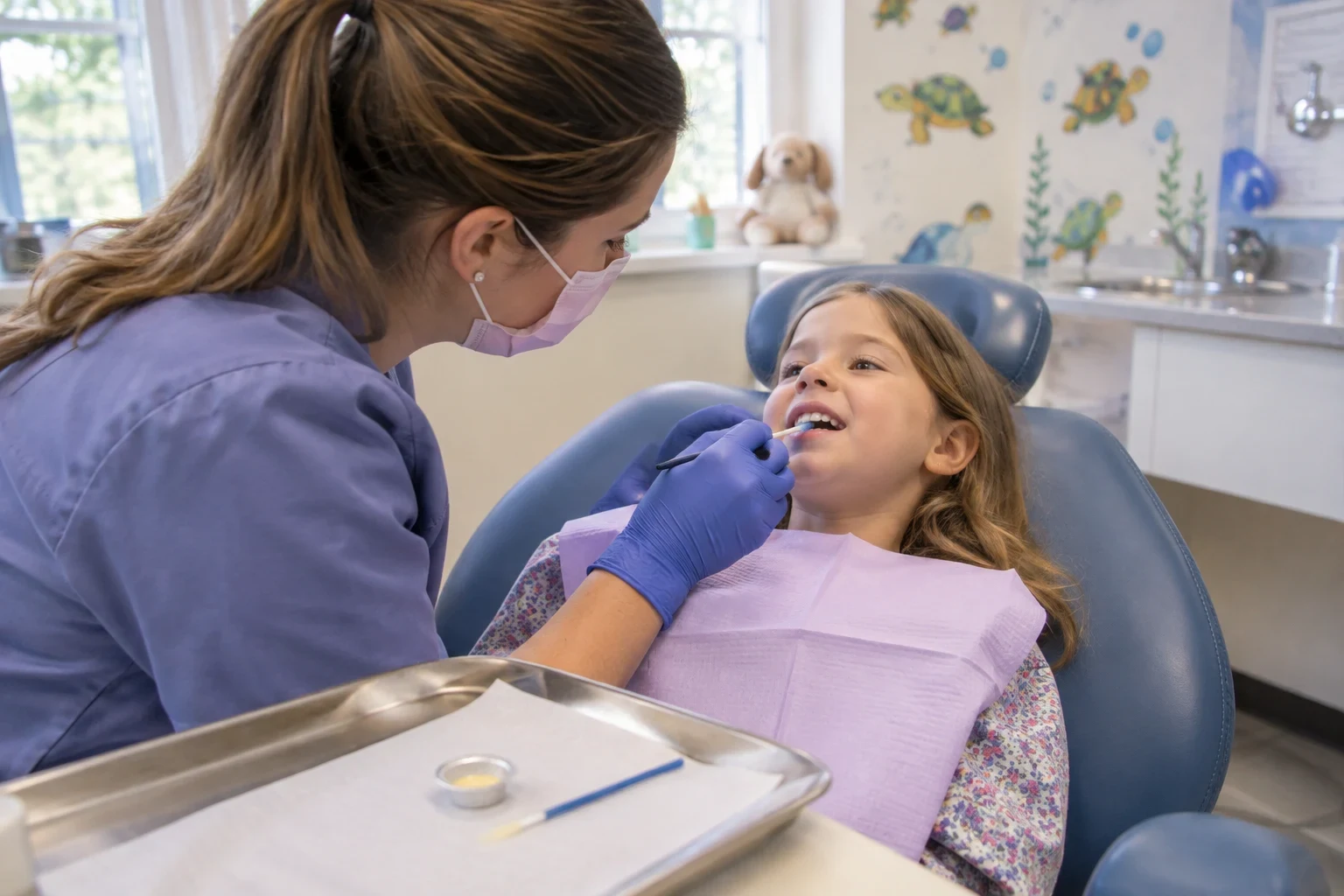
Fluoride varnish is a thin, sticky coat we paint on your child's teeth in under a minute. It feeds minerals back into enamel, helps reverse early chalky spots and makes teeth harder for cavity bacteria to break down. No needles, no drilling, and kids can eat soon after.
How Fluoride Varnish Protects Young Teeth
Every time your child eats, bacteria in plaque turn sugars into acid. That acid pulls calcium and phosphate out of the enamel surface. Saliva puts some of it back, but when snacks and juice come often, the losses win. The first sign is a dull white spot, usually near the gumline. That spot is not yet a hole, and it can still be repaired.
Fluoride speeds up that repair. When fluoride is present as minerals redeposit, enamel rebuilds with fluorapatite, a crystal that resists acid better than the original. Varnish holds a concentrated dose against the teeth for several hours, far longer than a rinse or toothpaste can.
Baby teeth have thinner enamel than adult teeth, so decay moves through them faster. A fluoride treatment at each checkup is one of the simplest ways to slow that down, and it pairs well with sealants on the back molars.
What a Fluoride Visit Includes
- A look at the enamel first
- Before anything is applied, we dry the teeth and check for white spot lesions, staining in the grooves and plaque buildup. Drying matters because early spots hide when teeth are wet.
- Varnish, not foam trays
- We use a fluoride varnish painted on with a small brush. It sets the moment it touches saliva, so very little is swallowed, and there are no trays for a toddler to gag on.
- A dose matched to your child's mouth
- A full mouth takes only a thin coat, less than a milliliter. We use less for a baby with a few teeth than for a ten-year-old with mixed baby and adult teeth.
- Aftercare in plain terms
- We tell you what to eat and when to brush next. You leave knowing what the yellowish film on the teeth is and when it will be gone.
- A recall plan based on risk
- Kids with active white spots, braces or frequent snacking may benefit from varnish every three months. Others do well at their regular six-month visits.
Signs Your Child Could Use Extra Fluoride
Chalky white spots near the gums
These are areas where enamel has lost minerals. Caught at this stage, fluoride can often harden them again before a filling is needed.
A recent cavity
One cavity means the conditions that caused it are still in the mouth. Fluoride helps protect the neighboring teeth while habits change.
Well water at home
Private wells often carry little natural fluoride. If your family drinks well water, your child may get less fluoride day to day than kids on a fluoridated town supply.
Frequent snacks or sipping
Juice in a sippy cup, gummies or all-day grazing keep the mouth acidic for long stretches. Enamel has less time to recover between exposures.
Braces or a space maintainer
Brackets and bands trap plaque at their edges. Those are the spots where white rings show up when the hardware comes off.
What Affects the Cost of Fluoride Treatment
Fluoride varnish tends to be one of the smaller charges on a dental bill. Your insurance plan and how often your child needs it shape most of the cost. Before we apply anything, we walk you through what to expect. You can pay with Visa, MasterCard or Discover, use most insurance plans, or spread the cost over time with the CareCredit Patient Payment Plan.
How often your plan allows it
Many plans pay for fluoride only a set number of times each year. If your child benefits from varnish every three months, the added visits may fall outside that limit.
Age limits on coverage
Some plans drop fluoride coverage once a child reaches a certain age. Teens in braces can still gain from it, so we look up your plan's rules ahead of the visit.
Done at a checkup or on its own
Varnish applied during an exam and cleaning saves you a separate trip. A fluoride-only appointment can be billed differently.
Other work the exam turns up
If we spot a cavity, a filling or sealants are separate procedures with their own charges. We explain each one and what it costs before any work begins.
What Happens in the Chair
- 1
Clean and dry
Fluoride works best on clean enamel, so we start with the cleaning or a quick brush. Then we dry the teeth with cotton or gentle air, a few at a time.
- 2
Paint it on
The varnish goes on with a soft brush, tooth by tooth. Most kids say it tastes like candy or mint. The whole step takes about a minute, and little ones can sit on a parent's lap.
- 3
Let it set
Saliva hardens the varnish right away. Teeth may look slightly yellow and feel fuzzy, which is normal and fades with the next brushing.
- 4
Go home with simple rules
Soft foods and cool drinks are fine right away. Skip hard, crunchy or sticky foods and hot drinks for the rest of the day, and wait until the next morning to brush.
Parents Ask About Fluoride Varnish
Can my baby or toddler have fluoride varnish?
Yes, from the first tooth onward. We use a very thin layer that grips the enamel, so almost none of it gets swallowed. The American Academy of Pediatric Dentistry recommends starting varnish as soon as teeth come in. Fluorosis usually comes from kids swallowing toothpaste every day, not from varnish a few times a year.
How long does the varnish need to stay on?
Most of the fluoride uptake happens in the first several hours. That's why we ask you to hold off on brushing until the next morning. After that, regular brushing clears away whatever remains.
Does fluoride replace sealants?
No, they do different jobs. Fluoride strengthens smooth surfaces and early weak spots. Sealants cover the deep grooves on back molars, where brush bristles and fluoride have a harder time reaching. Many kids benefit from both.
How much toothpaste should my child use?
Under age three, use a smear about the size of a grain of rice. From three to six, use a pea-size amount and teach them to spit. That gives daily protection without swallowing too much.
Will the same people see my child each time?
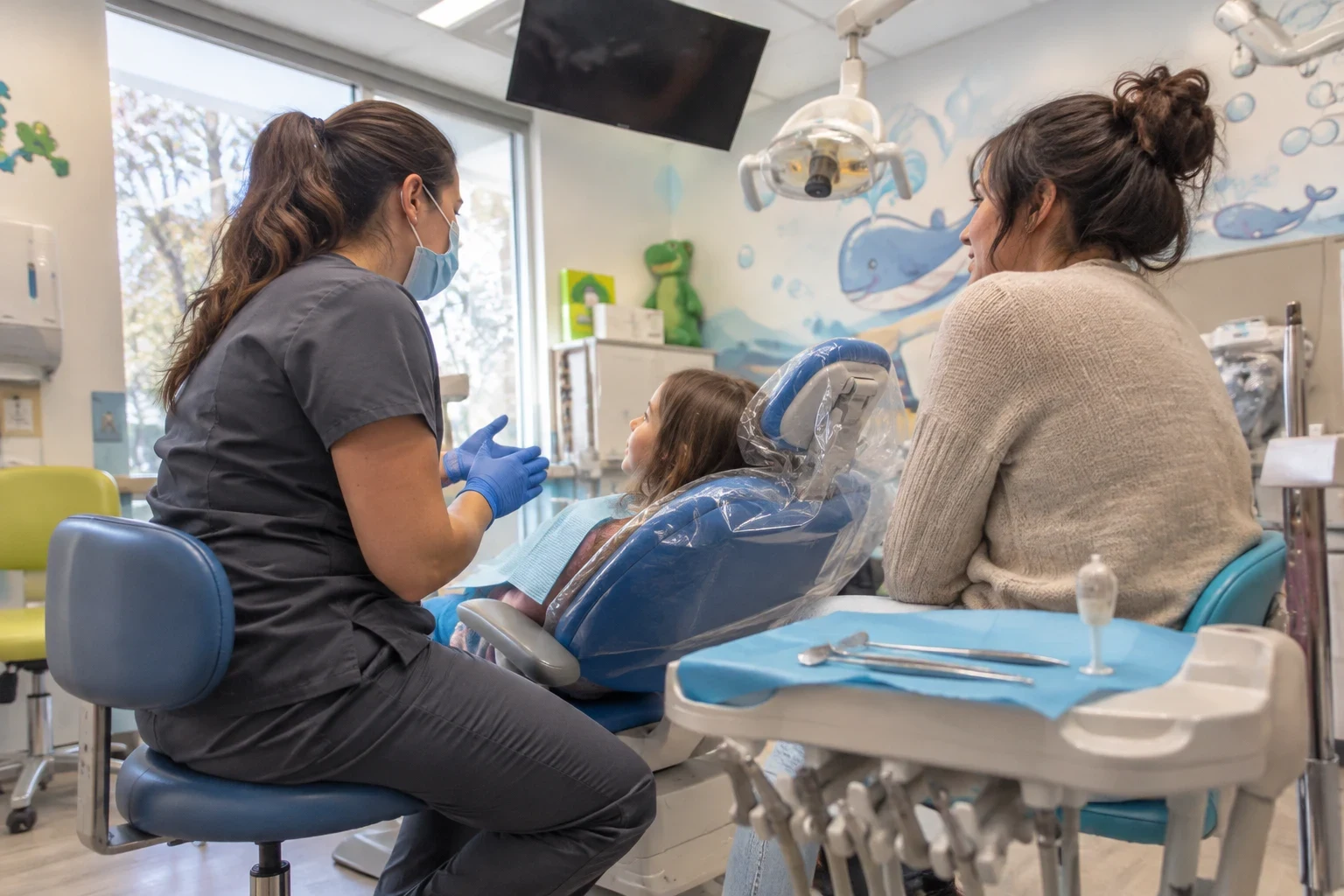
We're a small team, and we keep the same dentist and hygienist with your child from visit to visit when we can. The person checking a white spot today is the one who saw it last time and can tell if it is hardening or growing. Kids also settle faster with familiar faces.
Add Fluoride to Your Child's Next Visit
Fluoride takes a minute in the chair and protects enamel between checkups. Call to register your child, and we'll set up a visit with the same team each time.