ServicesExtractions
Tooth Extractions for Kids in Plympton
When a baby tooth won't let go, an infection has reached the root, or crowding needs room, we remove the tooth gently and explain each step. The same dentist and assistant who examine your child stay with them through the extraction and the follow-up.
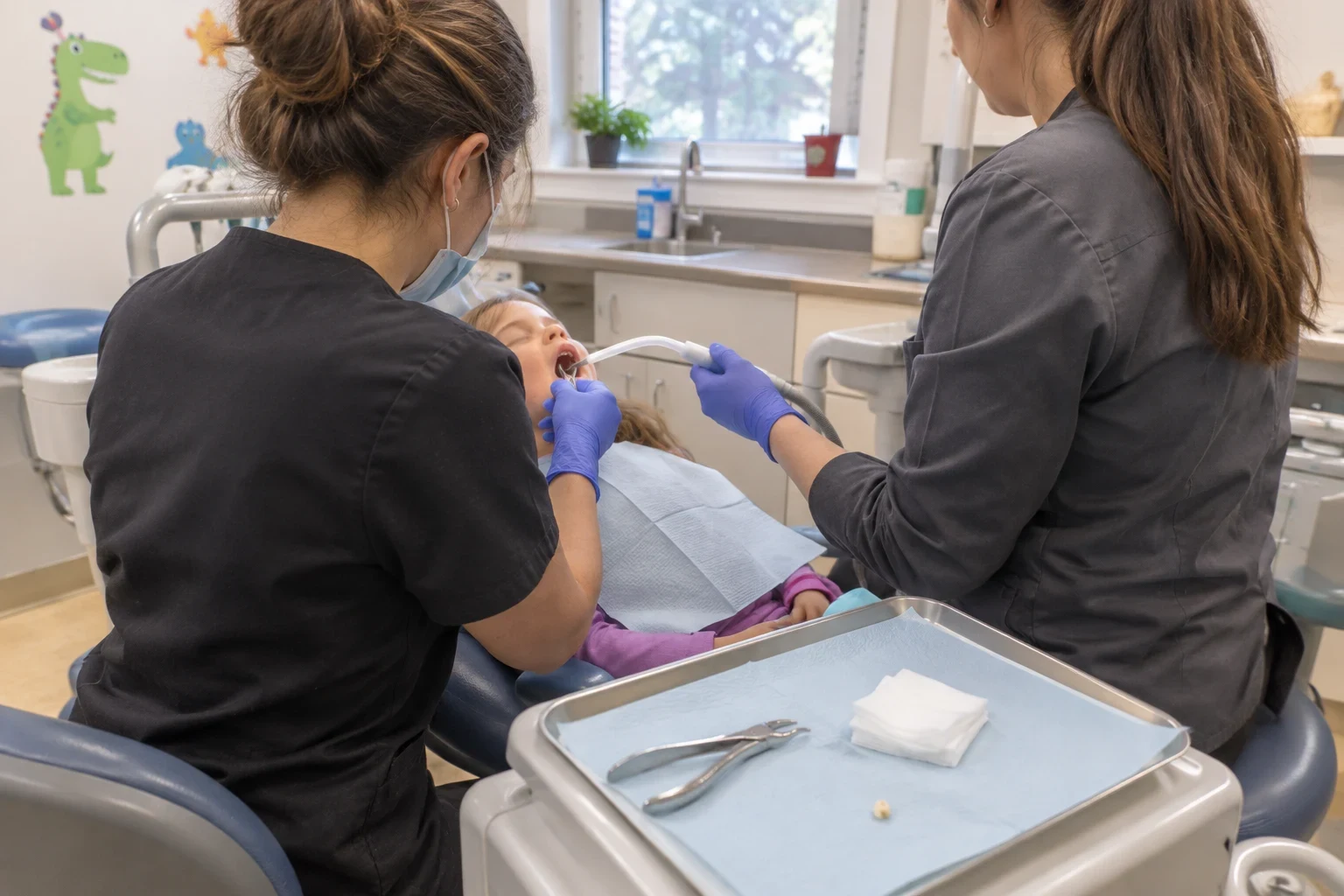
When pulling a tooth is the right call
Most of the time we work to save a tooth. A filling, a pediatric crown or a baby-tooth root canal can keep a damaged tooth in place until it is ready to come out on its own. An extraction makes sense when the tooth can't be restored, when it is blocking the adult tooth underneath, or when keeping it would cause more trouble than removing it.
Baby teeth are held by roots that slowly dissolve as the permanent tooth pushes up. That process, called root resorption, is why most baby teeth wiggle loose with no help. When the roots don't resorb evenly, or infection has spread into the bone around them, the tooth stays put and needs our help.
Our team is small on purpose. The dentist who walks you through the X-ray is the one who numbs the tooth, and the same assistant sits with your child from the chair to checkout. Kids settle faster when the faces don't keep changing.
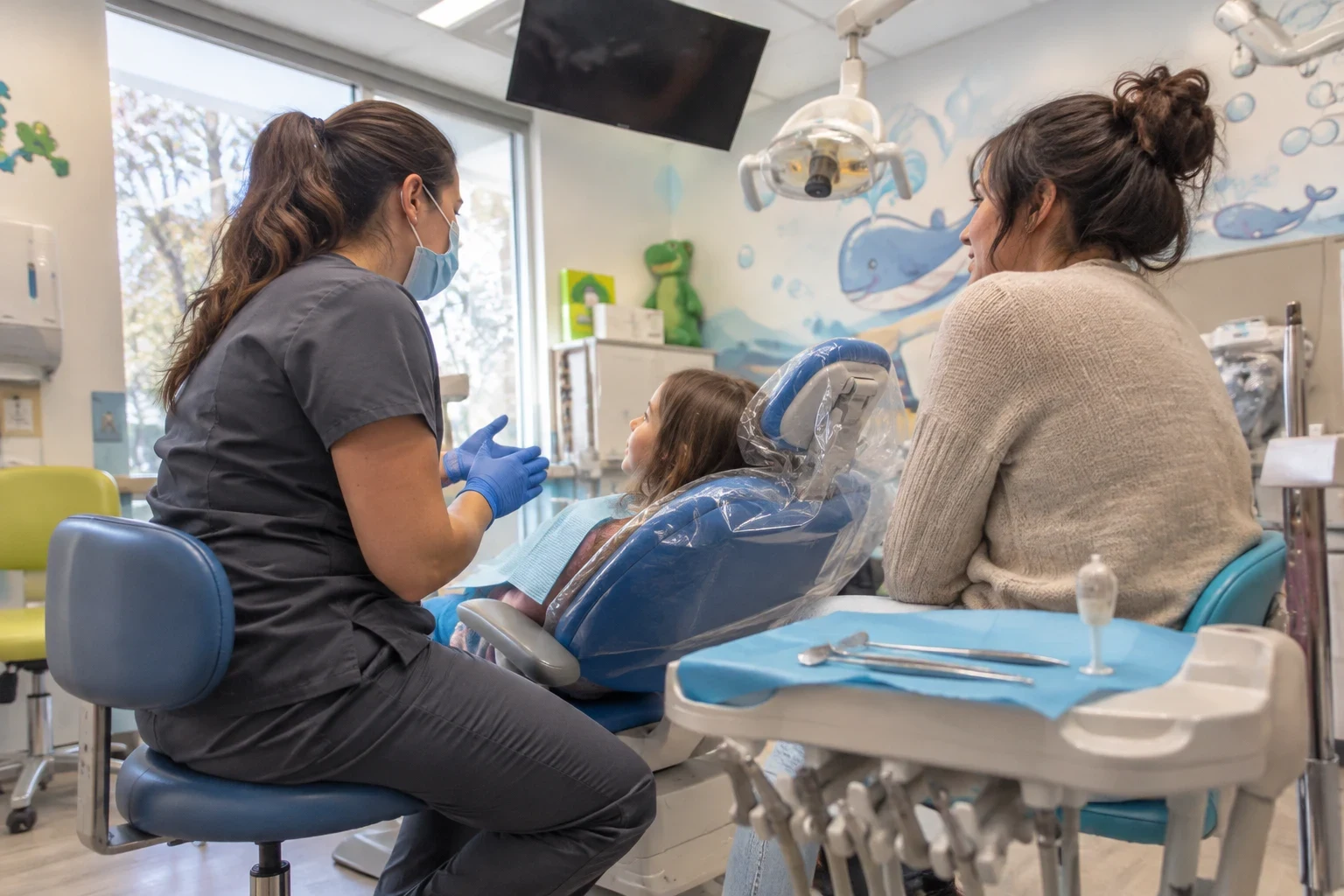
What an extraction visit includes
- 01
X-rays before anything else
We take an X-ray to see root length, how far the root has resorbed and where the adult tooth sits. That image tells us whether the tooth will come out simply or needs more care, and we show it to you before we begin.
- 02
Numbing in two steps
A flavored topical gel goes on first so the local anesthetic is barely felt. We wait for the area to go fully numb and check it before starting.
- 03
Gentle removal
Baby teeth have short, thin roots, so most come out with steady pressure in a few minutes. Permanent teeth removed for orthodontic reasons take longer, and we tell you that ahead of time.
- 04
A plan for nervous kids
For a child who is very anxious, very young or needs several teeth out, we talk through the options on our Sedation Dentistry page before the day is set.
- 05
Planning for the gap
If a back baby tooth comes out years before its replacement is due, neighboring teeth can tip into the space. We check whether your child needs a space maintainer and explain why.
- 06
Aftercare you can follow
You leave with extra gauze and written instructions covering food, bleeding and pain relief for the first day.
Questions about Extractions?
Call(781) 725-5936Signs your child may need a tooth removed
Shark teeth
An adult tooth comes in behind a baby tooth that hasn't loosened, most often the lower front teeth around age six. Sometimes the baby tooth loosens within a few weeks. If it doesn't, we remove it so the tongue can guide the adult tooth forward.
A bump or swelling on the gum
A pimple-like bump near a decayed tooth is often a draining abscess. If the infection has destroyed too much root or bone, taking the tooth out keeps it from reaching the adult tooth forming below.
A tooth broken below the gumline
Falls and sports knocks can split a tooth too deep for a crown to grip.
Lingering pain with deep decay
Pain that wakes your child at night or lasts long after eating usually means the nerve is involved. We'll check whether a root canal or an extraction is the better fit.
Crowding flagged by an orthodontist
Some treatment plans call for removing specific baby or permanent teeth to make room. We review the plan with you and work from your orthodontist's notes.
How extraction day goes
- 1
Talk it through
We tell your child in plain words what they'll feel: pressure and a little pushing, not sharp pain. You can stay close by so they see a familiar face.
- 2
Numb and check
Topical gel, then local anesthetic. We test the area and only begin once your child confirms it feels asleep.
- 3
Remove and pack the site
After the tooth is out, your child bites firmly on gauze for 20 to 30 minutes. That pressure helps a blood clot form in the socket, which is how the gum heals.
- 4
The rest of the day
Stick to soft, cool foods and skip straws and hard spitting for a day so the clot stays in place. Watch that your child doesn't chew a numb lip or cheek while the anesthetic wears off, which can take a couple of hours.
- 5
Follow-up with the same team
If we want to check healing or fit a space maintainer, that visit is with the same dentist and assistant who did the extraction.
What affects the cost of an extraction
We can only price an extraction once the exam and X-rays show what the tooth and its root are doing. Before any work begins, we go over the estimate with you line by line. We accept MasterCard, Visa, Discover, most insurance plans and CareCredit Patient Payment Plan.
- Simple or surgical
- A baby tooth that is loose or fully above the gum usually comes out as a simple extraction. A tooth snapped off at the gumline, a root that curves, or a root fused to the surrounding bone needs a surgical approach, which takes more time in the chair.
- Number of teeth
- Removing two or three teeth in a single visit raises the total for that day. It can also spare a nervous child repeat trips to the chair.
- Sedation
- Some kids need more than local numbing to get through the visit calmly and safely. When sedation is part of the plan, you'll see it as a separate line on the estimate.
- Follow-up care
- If a back baby tooth comes out early, a space maintainer may be added to the plan. We base that call on your child's age and which tooth was removed, and we tell you plainly when it isn't needed.
Extraction questions from parents
Will my child feel it?
Once the area is numb, kids feel pressure but not pain. We test the numbness before we begin and pause if your child signals. Some soreness afterward is normal and usually fades within a day or two.
Why not wait for the baby tooth to fall out on its own?
In many cases waiting is the right choice, and we will tell you when it is. An infected baby tooth is different, because the infection can harm the enamel of the adult tooth developing underneath. A baby tooth that refuses to loosen can also steer the new tooth out of position. The X-ray tells us which of these applies to your child.
When can my child eat normally again?
Soft foods like yogurt, pasta and applesauce are best for the first day. Most kids return to their usual meals within two or three days, chewing on the other side while the socket closes.
Does every extraction need a space maintainer?
No. Front baby teeth rarely need one, and neither does a tooth whose adult replacement is about to erupt. Back molars lost early are the main case, because the teeth behind them tend to drift forward into the gap.
What if my child is too scared to sit still?
For many kids, a clear explanation, an unhurried pace and the same faces from start to finish are enough. When that isn't the case, we'll talk with you about sedation dentistry so the extraction can be done safely.
Can my child go back to school the next day?
Most children do. Keep sports and rough play light for the rest of the extraction day, and pack soft foods for lunch if the area is still tender.
Set up your child's extraction visit
One phone call gets your child registered as a new patient and booked with our team. Tell us about the tooth so we can plan the right amount of time for your child.